

A HERITAGE MISSISSAUGA PROFILE ON KAITLYN WILCOX
WRITTEN BY: MEGHAN MACKINTOSH
Wilcox was born and raised in the Port Credit area. Her maternal ancestors come from Moose Deer Point First Nation, and her ancestry includes Potawatomi, French, Irish, and English heritage. From a young age, she learned that her identity would be both meaningful and complicated.
“In the early 2000s, there weren’t many Indigenous people visible here,” she recalls. “There was a lot of stigma. A lot of ignorance. People thought we were all gone.”
At school, that ignorance often fuelled racism. Advice from adults oftentimes took the form of microaggressions, macroaggressions, or silence.
Wilcox became aware early on of the misrepresentation and lack of truth. Indigenous histories, presence, and futures were forgotten in the education system and in public life. At the same time, the land itself was teaching her something else.
“Even though these aren’t my traditional lands, I still feel a responsibility here,” she says. “My people were displaced many times. We’re from the Lake Michigan area originally, then moved to Moose Deer Point. Through colonization, my family eventually ended up here. That history lives in your body.”
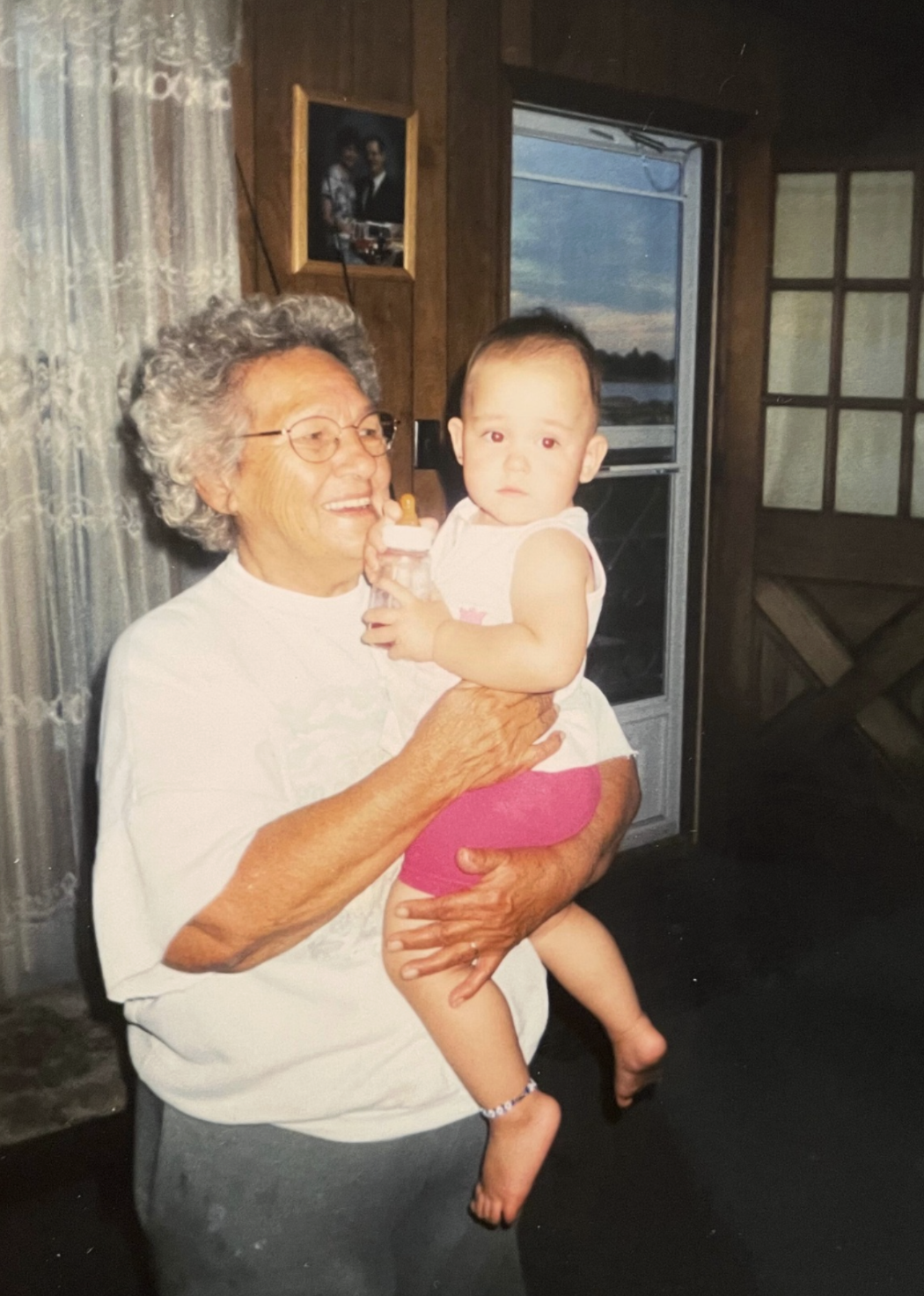
Much of what grounded Wilcox during her childhood came from her grandmother, whom she called her Nokmes. Their relationship offered stability and safety.
Before her first day of kindergarten, her grandmother sat her down and lit a smudge.
“She told me, ‘No one’s going to teach you this, and I want you to be proud of who you are, even when people tell you not to be,” Wilcox recalls. “She taught me that we come here with purpose. We have responsibilities.”
When her grandmother passed away from cancer, Wilcox was still very young. The loss was profound.
“I felt like I lost who I was,” she says. “I didn’t have much time with her. But I also felt her reminding me that this was still my responsibility. To carry these teachings forward. To be proud, even when it’s hard.”
Those teachings stayed with her, shaping how she understood identity, loss, and resistance.
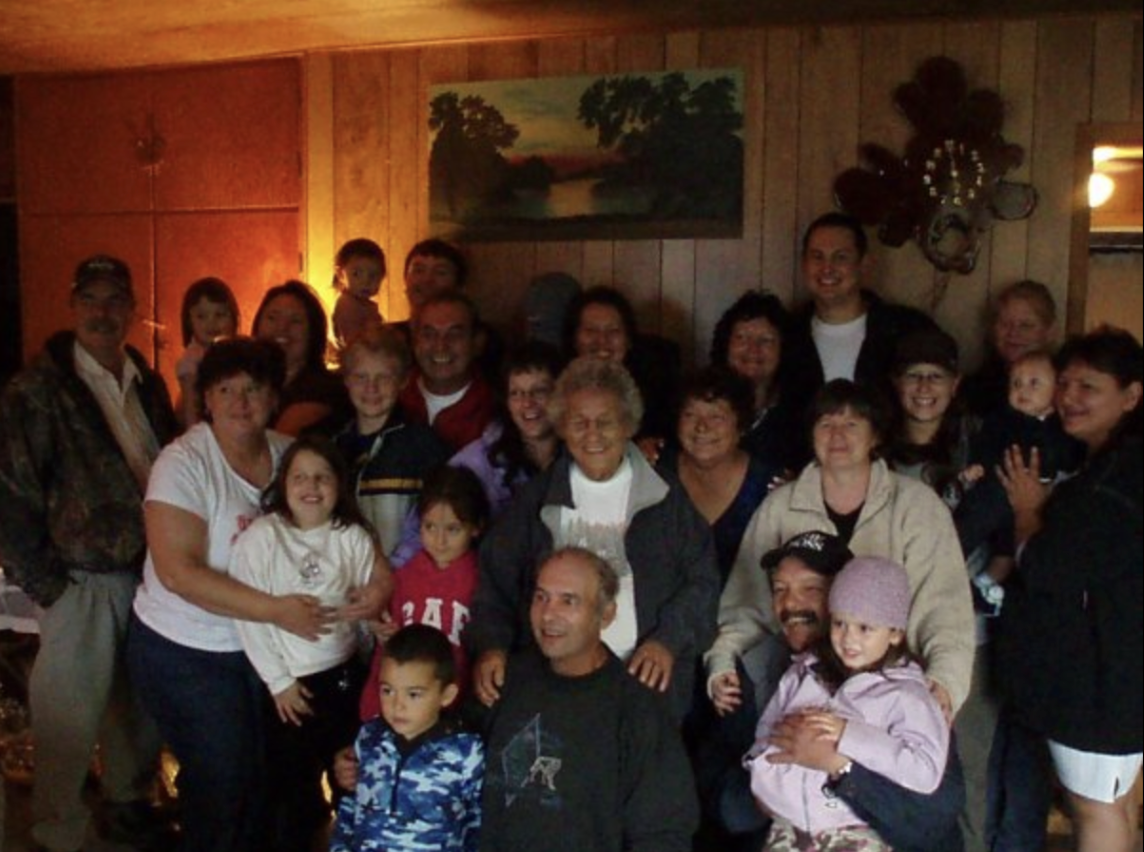
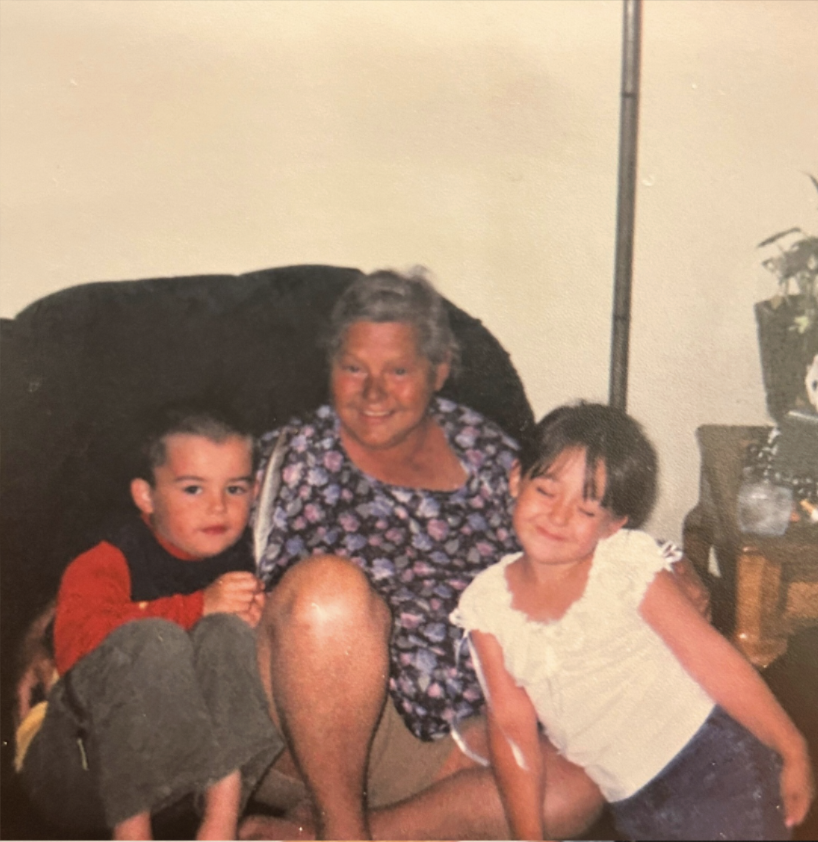
Art became one of the first places where Wilcox felt her identity and truth could be expressed fully. From an early age, she gravitated toward visual storytelling, learned through family and ancestral memory.
“I was born an artist,” she says. “That comes from my family and my community. Art is a way of telling the truth.”
For a time, she stepped away from art after being told her work did not fit the expected standards. In high school, however, an art teacher recognized the strength of her voice and encouraged her to continue.
“She didn’t ask in a judgmental way,” Wilcox says. “She asked because she wanted to understand. She made space for my story,” when, elsewhere, it was often taken.
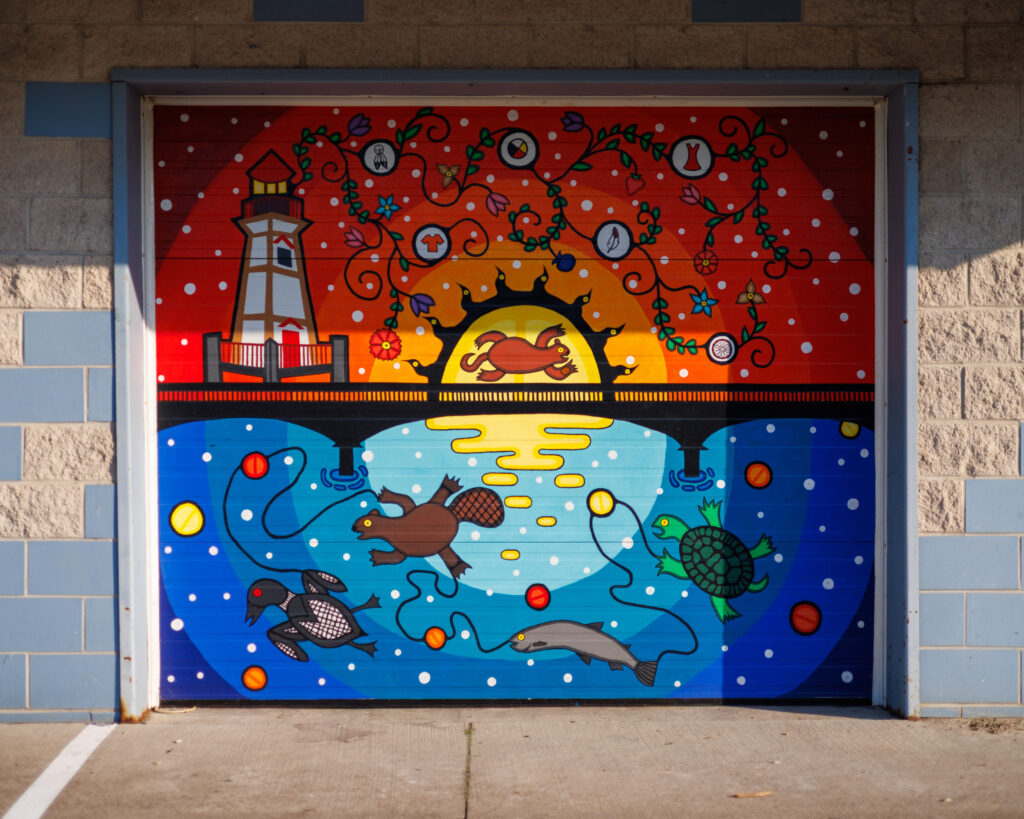
That encouragement helped Wilcox return to art as heart work, a way of honouring relationships, land, and responsibility. Over time, her work entered public spaces, including murals along the Port Credit waterfront.
One mural reflects what she describes as an Indigenized creation story of Port Credit. Animals, land, and relationships are central, reflecting how she experienced the area growing up.
“When people see it, it opens conversations,” she says. “It’s not an immediate door shutting anymore. Things are opening.”
Seeing her work displayed publicly affirmed something she had hoped for quietly.
“I never thought I would see this kind of change in my lifetime,” she says. “But I’m starting to see it.”
Wilcox’s path eventually led her to social work, though she approached the field with care. She speaks openly about the harm Indigenous communities have experienced within social systems.
“Social work has been very harmful to Indigenous people,” she says. “My own family has lived that. Apprehension. Racism. Disconnection.”
A turning point came in high school, when she encountered a social worker who worked differently.
“She didn’t push my Indigeneity aside,” Wilcox explains. “She invited it. She helped me reconnect with ceremony and with community.”
That experience shaped her direction. Wilcox pursued post-secondary studies in social work with a focus on Indigenous knowledges and later completed her master’s degree. Today, she works as an Indigenous social worker and researcher, grounding her practice in relational accountability.
“I don’t see myself as a professional first,” she says. “I’m a helper. That’s a responsibility to your community, your kin, the land, and all your relations.”
Wilcox’s work emphasizes approaches that honour body, spirit, and land together. She speaks carefully about ceremony and about practices that have supported Indigenous peoples long before they were named or formalized by Western systems.
“When you drum, you’re holding the heartbeat,” she says. “When you’re in a lodge, you’re entering your mother’s womb. That’s safety. That’s regulation.”
These teachings also informed her graduate research, which explored decolonizing the body through Indigenous frameworks of care. Rather than separating intellect from spirit, Wilcox integrated ceremony, reflection, and art into her work, while respecting cultural protocols.
“The longest journey you’ll ever take is the one from your head to your heart,” she reflects, as shared by many of her mentors.
At 25, Wilcox resists being framed as exceptional for her age. Instead, she returns to responsibility and continuity.
“I think about the seven generations,” she says. “What we do today affects those who came before us and those who are coming next.”
Whether through art, social work, or moments of pause and reflection, Wilcox approaches her life with intention. She listens. She waits. She checks in with her heart before moving forward.
“Little Kaitlyn is rooting for me,” she says. “So are my ancestors. And I want the next generations to have things a little kinder than we did.”
In Mississauga, on land shaped by change, memory, and resistance, her story is one of presence, care, and enduring reconnection.