

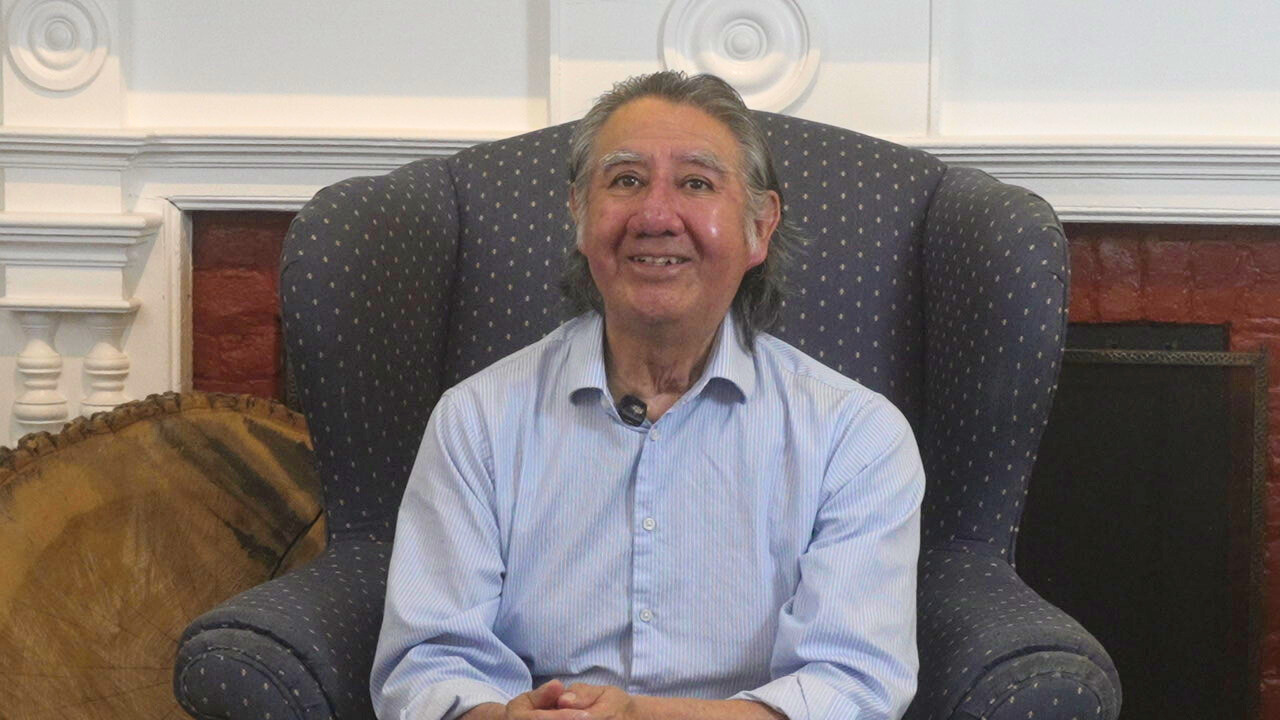
A HERITAGE MISSISSAUGA PROFILE ON EMMANUEL CRUZ SAN PEDRO
WRITTEN BY: MIGUEL CRUZ OROZCO
Emanuel grew up in Teotongo, a small town in the Mesoamerican region. The territory originally belonged to the Ngiwa people and was conquered by the Aztecs and renamed in 1460 CE, although the Ngiwa population remained there for centuries. The Ngiwa had many towns, and their capital was the town of Coixtlahuaca. Teotongo was the southernmost town and functioned as a border between the purely Ngiwa regions and the allied Mixtec regions. It was a mixed town, with a Ngiwa majority and a Mixtec minority. The town’s name, Teotongo, means “place where the little god resides.”
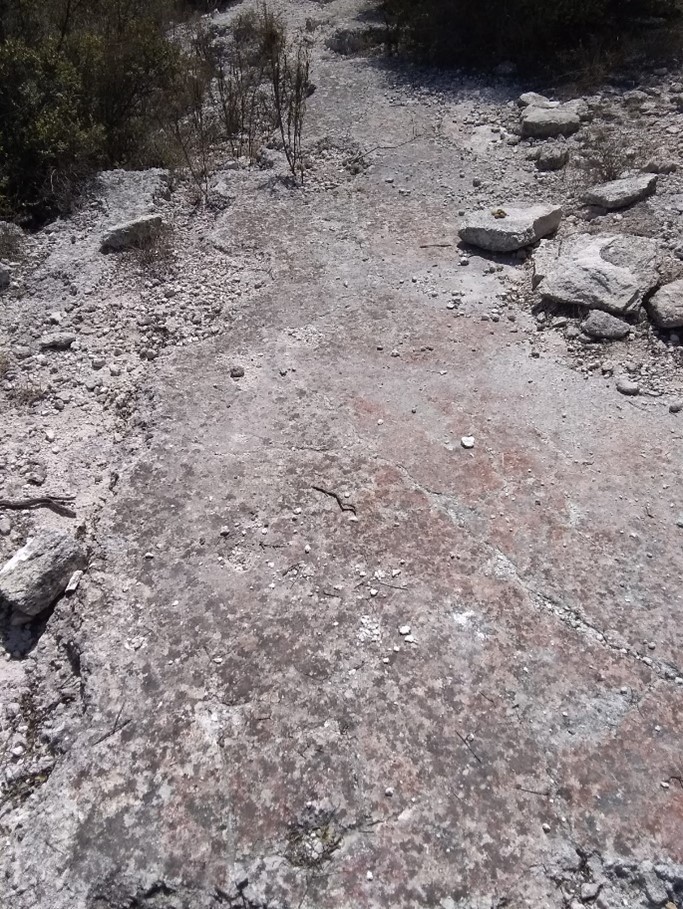
The area surrounding Teotongo had three pre-Hispanic temples: Cerro Flor; El Gentil, located in the community of La Luz; and La Nopalera, in the community of Barrio Piedras Negras. All were important places, though Cerro Flor was the most significant. Here, Ngiwa religious leaders prayed, lived, studied, and offered small amounts of blood and a special drink of pulque, made from aguamiel, to their pantheon of gods. Their primary god was the god of wind, along with secondary gods associated with deer, turkey, rain, and lightning. The religious leaders asked for what they needed, mainly rain during the dry season to ensure healthy crops. These rituals were taught orally to the next generation. Only select youths were chosen to become future religious leaders, based on their maturity, responsibility, and standing in the town.
Most temples were inaccessible to the general population because they were located deep in the mountains. After colonization, the temples were abandoned, and only ruins remain. Emanuel has visited two of the temples, though not the most important one on Cerro Flor.
When the Spaniards arrived, they began evangelizing the Ngiwa towns, and Catholic and Ngiwa religious traditions gradually blended beginning in the 16th century. Ngiwa religious leaders were no longer permitted by the Catholic Church, and the sacred temples were lost. However, traditions and language were maintained for many centuries afterward. Emanuel knows many of these traditions because his family continued to practice them until the mid-20th century.
Emanuel learned the stories of his ancestors through oral tradition from his grandmother, who had learned them from her great-grandmother, and so on.
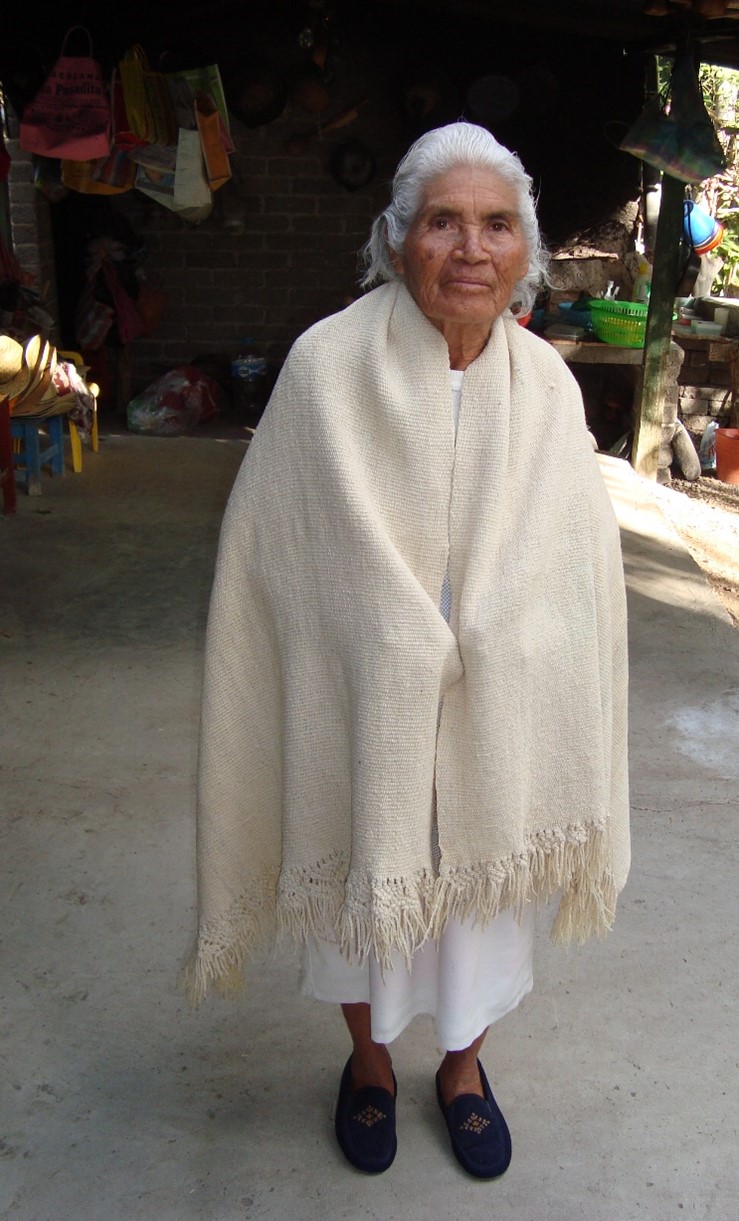
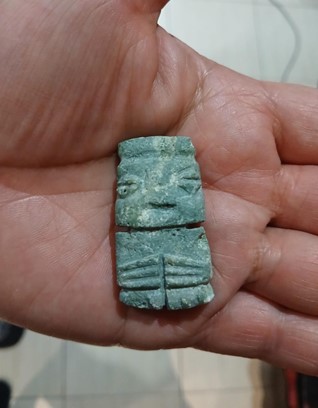
Emanuel’s paternal lineage was known as a family of healers. They practiced natural medicine, using special herbs and remedies to care for the sick and to help pregnant women. These remedies were used to position the fetus for an easier birth, heal childbirth injuries, and support proper milk production. Emanuel’s grandmother performed many of her healing practices in a temazcal, a traditional healing bath using special herbs collected from the fields. Although healers were highly respected, there were very few in the town; during his grandmother’s time, only two people served in this role.
On his paternal side, Emanuel’s family also practiced spiritual healing. It was believed that passing through spiritually dangerous areas could result in spiritual illness. Emanuel’s paternal grandmother and great-grandmother dedicated themselves to curing these ailments as well.
In addition, Emanuel’s family treated physical illnesses such as diarrhea, smallpox, and many others. Emanuel remembers seeing his grandmother care for the sick in her own home. People were invited to stay until they recovered, and individuals from other towns traveled to see her because of her reputation.
Emanuel remembers that between the ages of six and eleven, his grandmother often asked him to collect herbs and water for her treatments. However, his strongest memories are from times when he himself was sick and she cared for him. When he had a headache from too much sun exposure, she would place a warm towel on his head, pull his hair back, and apply chamiso (four-wing saltbush) to his neck, which helped him feel better. When he had a stomach ache, she gave him an extremely bitter tea made from ruda. Although it tasted unpleasant, it was effective. These moments made Emanuel feel safe and cared for, and he learned to trust her deeply.
Emanuel’s grandmother was also a skilled cook who prepared foods for celebrations, such as chilies for mole and chocolate for drinking. He remembers the flavours clearly.
Emanuel’s maternal grandmother specialized in agricultural work. She raised sheep, used plants to make ropes for tying horses and other large animals, created slings and gamarras, planted corn, and made and sold pulque. She combined Ngiwa traditions with modern techniques. Emanuel remembers her as a woman who was always working and highly effective, from her youth to her final days. After her husband passed away, she kept her family together and healthy largely on her own.
Ngiwa traditions often blended with Christian practices. Emanuel’s father learned to sing in the town’s Catholic church and became a cantor apprentice. Cantors were trained orally by previous generations and traveled between towns to perform. Although the songs were in Spanish, the process followed Ngiwa tradition. Emanuel’s father eventually left this practice when he moved to Mexico City in search of better opportunities. Through this experience, he learned to play a special piano built in 1750 that was used only in the church.
Because Emanuel’s father no longer practiced as a cantor, Emanuel did not know that his father could play the piano until they were both older. Emanuel first heard him play during his grandmother’s farewell ceremony, when Emanuel was in his mid-twenties. He remembers the congregation praying in a special way, following the rhythm of the piano, and describes the atmosphere as very beautiful. The moment was deeply emotional for him: he felt sorrow for his grandmother’s passing, but also a profound connection to his family and community through the sound of the instrument. To Emanuel, the music reflected his family’s past and the endurance of Ngiwa culture.
Like his father, Emanuel’s mother eventually moved to the city. While living in Teotongo, she cut young people’s hair for festivals, quinceañeras, communions, and weddings. Emanuel remembers her as hardworking and generous, always helping the community during celebrations and events.
As a child, Emanuel worked as a shepherd, caring for sheep in Teotongo. He learned everything through oral teaching, passed down from older generations, particularly from his uncles.
One lesson stands out clearly in his memory. After one of his lambs was taken by an eagle, his grandmother taught him how to “read the sky” by observing the time of day and the birds’ hunting patterns to predict when eagles would be active.
Later generations lost much of Ngiwa culture during the process of modernization. Many young people left the town, and traditions were no longer passed down. Inequality increased, land became unavailable, communal practices changed, and families were forced to seek opportunities elsewhere. Emanuel’s parents were among those who moved to the cities.
Today, traditional healers no longer truly exist, and many natural remedies have been lost. Emanuel explains that some healing knowledge survives in limited documentation, but much of it is scarce.
The Ngiwa language has largely disappeared due to a Spanish-only policy implemented in the 20th century that outlawed its use for decades. Emanuel’s grandmothers were fluent Ngiwa speakers, his mother spoke only a little, and the language has been lost to later generations.
Emanuel has written down many of the traditions he remembers. In his free time, he continues to research and document important cultural knowledge, such as the symbolic importance of squash.
Many Ngiwa traditions survived by merging with Catholic practices. People attended church and celebrated saints, while still honouring their ancestors at home.
For example, newlyweds celebrate the dance of the chicken and the rooster. This tradition evolved from the original Turkey Dance (Baile del Guajolote), which featured a male and female turkey carried by a dancing couple. The dance symbolized a wish for prosperity, health, and freedom from hardship, and dancers carried food such as tortillas and chilies to represent food security. Over time, chickens replaced turkeys, as they were easier to handle, and the tradition became integrated into Christian wedding ceremonies.
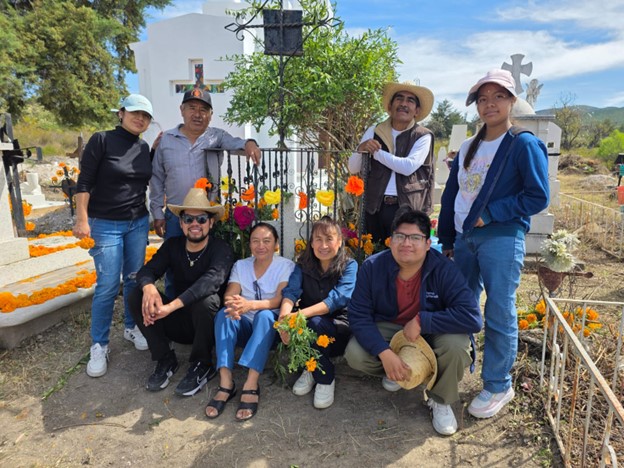
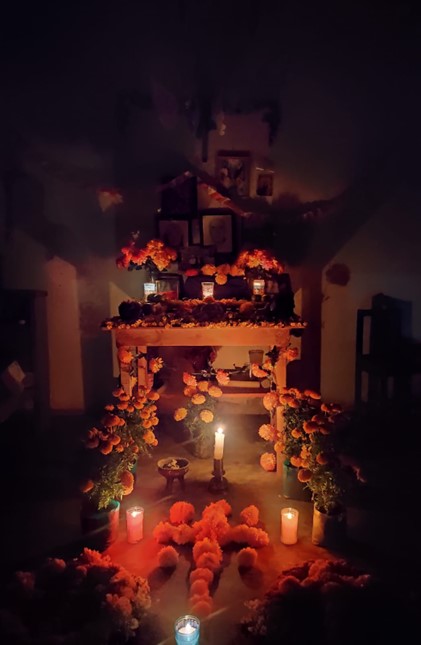
Another important tradition is the Day of the Dead. While celebrated across Mexico, it holds special meaning in Teotongo. On November 1 and 2, it is believed that the dead return to visit the living. Families prepare offerings of food and flowers based on what their loved ones enjoyed in life. Pulque, mole, and special breads are specific to the Ngiwa region. The celebration is joyful and centred on remembrance.
One tradition that lasted longer than many others was the role of the Tonishano. The Tonishano was a respected elder known for wisdom and eloquence. He was invited to celebrations and spoke at weddings, offering guidance on potential challenges and reminding the community of its values. Emanuel’s uncle served as a Tonishano, and Emanuel remembers him as humble, formal, and devoted to teaching young people and advising those in need. Although the role survived into the 1980s, it has since disappeared.
Another loss was the disappearance of traditional land animals after the introduction of firearms. Deer, turkeys, and tigrillos (wildcats) vanished after centuries of overhunting. Lizards, however, remain culturally significant. Among neighbouring Mixtec peoples, lizards were gods, believed to bring rain when they sang, and this belief was adopted in Teotongo. Although few people believe in their divine role today, lizards remain an important cultural symbol.
The environment that once sustained the Ngiwa has also been damaged. Rivers that were once central to daily life have become contaminated, though community members and local government continue efforts to protect them.
Some traditions evolved independently of European influence, including Teotongo’s justice and governance system. The Ngiwa practiced communal service and community-centred governance, which still exists today in an evolved form. Teotongo now functions with a semi-autonomous system in which adult men were required to volunteer in civic roles, often as temporary local police. Emanuel’s uncle served in this role, while his father was elected to a higher administrative position.
Emanuel remembers his father dedicating himself to investigations, conflict resolution, and extensive documentation. He traveled throughout the town and to regional justice ministries to present cases, most of which involved small disputes. His father was given the Bastón de Mando, or Staff of Command, a polished wooden staff with a metal tip. Though modest in appearance, it was deeply respected. His father was never paid for his work but believed strongly that maintaining justice was essential to the health of the community. Emanuel admired his father’s dedication and selflessness.
Despite some traditions surviving and evolving, the greatest challenge to preserving Ngiwa culture remains migration. Many people, including Emanuel and his family, no longer live in their ancestral territory.
Emanuel’s life outside Teotongo began when his father decided that without land, it no longer made sense to stay in a place where land was essential for survival.
Although Emanuel wanted an education, his family could not afford university tuition. He obtained a scholarship to the University of Chapingo, which covered his basic needs. He studied agricultural engineering and later became a professor, working at the university for 28 years.
Emanuel married his wife, Emilia, in 2001. She was also highly educated and wanted to pursue a doctoral degree outside Mexico. Inspired by his father’s example and Emilia’s adventurous spirit, they decided to seek new opportunities abroad.
They moved to Guelph, where Emilia earned her PhD at the University of Guelph. Emanuel worked in manual labour while she studied and formed friendships with people from many backgrounds. After coming to appreciate Canadian society and values, they chose to remain in Canada.
Years later, the family moved to Mississauga so they could stay together while their son, Miguel, studied at the University of Toronto Mississauga.
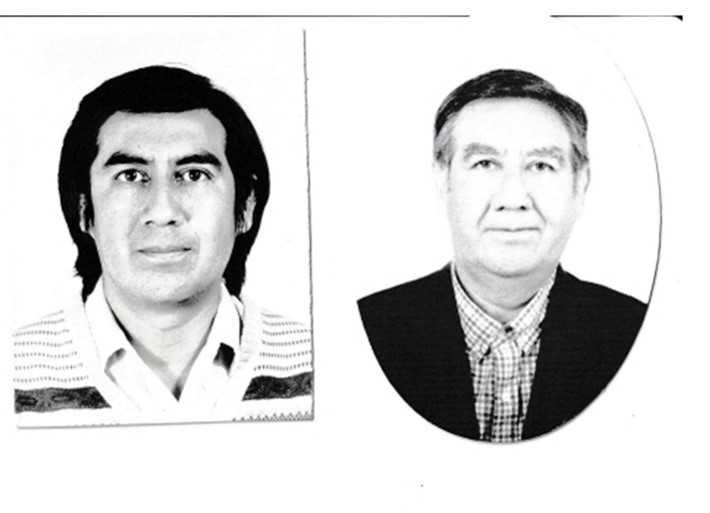
Family unity is central to Emanuel’s identity, reflecting the close-knit life of his hometown. They cook, clean, and share responsibilities together, traditions he traces back to his Ngiwa upbringing.
Emanuel lives by the values passed down by his father and reinforced by his wife: keeping an open mind while never forgetting where one comes from. Emanuell’s father instilled this lesson into his identity, which is why Emanuel continues to read, write, and preserve knowledge about the Ngiwa people and Teotongo.
One reason Emanuel feels connected to Mississauga is its natural environment. Rivers and parks remind him of his hometown. He especially loves the Credit River; the sound of water moving over rocks soothes him and recalls memories of rain falling on a tipi made of agave leaves while he sheltered with his uncle. The rain striking the tipi and nearby corn plants created a rhythm like a small waterfall.
He also enjoys the songs of Mississauga’s birds, which remind him of the cenzontles, the regional bird from his hometown, known for singing a thousand songs. His grandmother kept cenzontles as pets, and they often learned melodies that people sang to them.
Emanuel values Mississauga’s multiculturalism and the presence of many traditions from around the world, which makes him feel that his own culture belongs here as well.
He hopes to learn more about Indigenous peoples in Canada and Mississauga, noting shared values around nature and family. He is particularly interested in dances and traditions, and in similarities such as the Three Sisters—squash, beans, and corn—which are central to many Indigenous cultures across the Americas.
Although Emanuel lives far from where he was born, he has never stopped longing for Teotongo and has never fully accepted that he may not return. His happiest memories remain with his cousin and grandmother, who loved and cared for him deeply. His father taught him never to let go of his home and to return when possible to contribute.
When Emanuel thinks of Teotongo, he remembers sitting beneath large trees, walking across hills, cutting wood with his uncle, and gazing at the stars on clear nights. These memories remain with him. Though he wonders what life might have been like had he stayed, he knows his heart has never left. As long as he remembers the beauty of his hometown and the traditions his family practiced, they will endure through the memories he records and the lessons he shares with his son.