


A HERITAGE MISSISSAUGA PROFILE ON DARIN WYBENGA
WRITTEN BY: MEGHAN MACKINTOSH
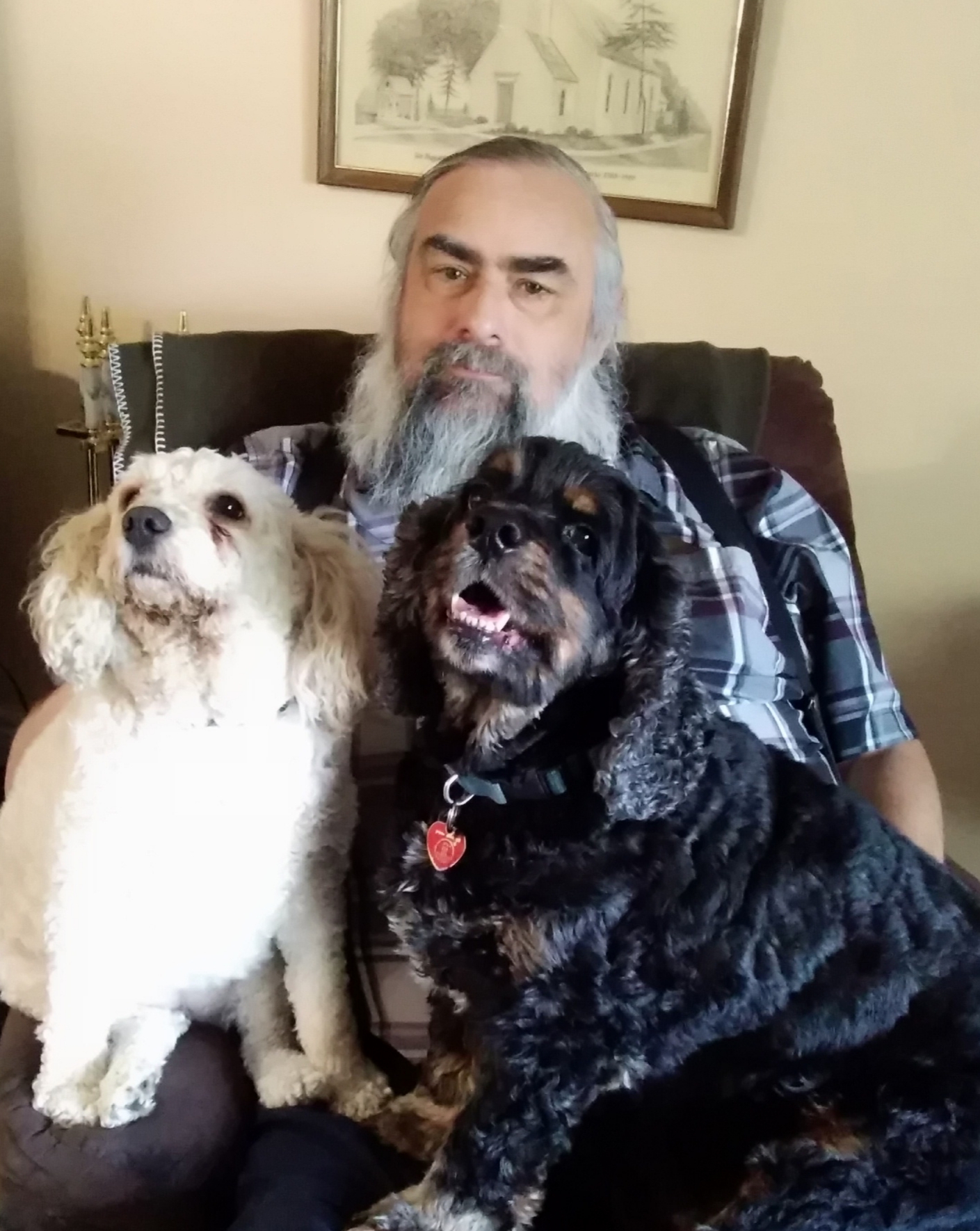
Darin grew up just outside the reserve near Hagersville, Ontario, in what he describes as a bicultural family.
His mother was from the Herkimer family of the Mississaugas of the Credit. His father was a Dutch immigrant who arrived in Canada after the Second World War.
“I grew up with what you might call bicultural competency,” he says. “I had the stern Dutch Calvinistic grandparents, and then my not-so-strict First Nations grandparents.”
That balance shaped much of his early life. Darin and his sister grew up close enough to the community to know their relatives, while also navigating the realities of living outside it.
Like many Indigenous women of her generation, Darin’s mother lost her legal status when she married a non-Indigenous man. The family remained connected to relatives in the community, but the law had already changed the way that connection worked.
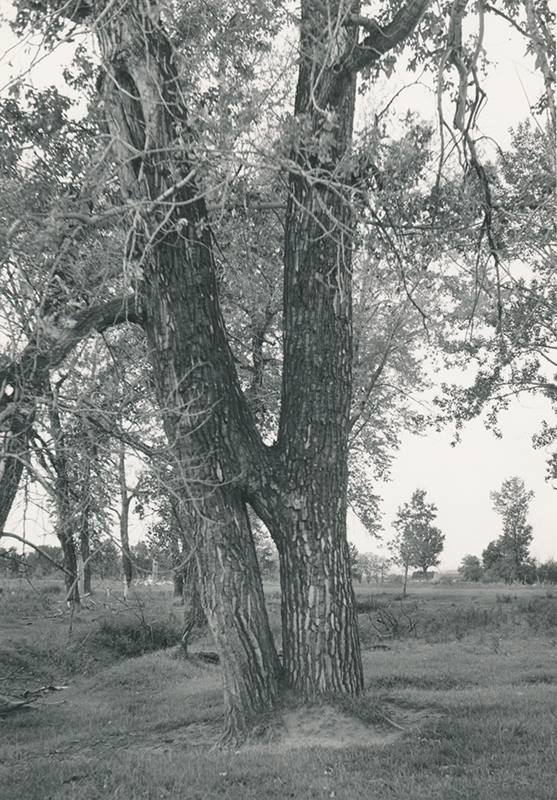
When Darin was fourteen, his family moved west to High River, Alberta during the oil boom of the early 1980s. He spent several formative years there, finishing high school and beginning university.
He remembers the prairie landscape, the sense of ruggedness in western Canada, and the feeling of seeing the Rocky Mountains rising in the distance.
Still, Ontario remained part of his story.
His family returned after changes brought by Bill C-31 restored status to many Indigenous women and their children. Darin’s mother regained her status and decided to come home.
His parents eventually built on family land within the Mississaugas of the Credit First Nation.
Today, Darin still lives there.
The original farmhouse has long since collapsed with age, but the connection remains. Several generations of his family have lived on that land.
“That’s kind of neat,” he says. “You know where your great grandparents were. You know where your grandparents were.”
Darin’s love of history began with a school trip.
He still remembers visiting Fort York as a child.
Soon he was reading about the War of 1812 and other moments in early Canadian history, borrowing books from the library, and waiting eagerly until history became a subject he could study in school.
By the time he reached Grade 8, he already knew what he wanted to do.
“I thought, I want to teach history,” he says.
He went on to teach elementary school for about twenty years. Over that time he taught nearly every subject, though he admits some suited him more than others.
History was always the one he loved most.
“You learn how things formed,” he says. “How things began. How did we end up the way we are.”
He also loved the moment when students suddenly understood something.
“Every now and then you’d see it,” he says. “The light would go on.”
That moment still drives much of his work today.
“I just like to tell people things they don’t know,” he says, “and then see the reaction.”
After leaving the classroom, Darin eventually began working with historical materials for the Mississaugas of the Credit First Nation. He helped digitize historical records and documents connected to the community.
That work gradually led him into the Department of Consultation and Accommodation, where he began explaining the history of the Mississaugas of the Credit to municipalities, governments, and project developers working within the nation’s territory.
Much of the work begins with a simple fact that many people have never been taught.
Most residents of southern Ontario do not realize that the Mississaugas of the Credit First Nation signed treaties covering nearly four million acres of land and waters across southern Ontario.
They also do not realize that those treaties still matter.
“We signed those treaties a couple hundred years ago,” Darin explains. “We expected to share the land with the settlers and work in a mutually beneficial relationship.”
Instead, that relationship was largely forgotten.
For Darin, a key part of his work has been helping people understand that treaties were not temporary arrangements from the past. They were agreements meant to continue.
“Knowledge you get is for using,” he says. “You gain that knowledge, and then you go out and make life better for yourself and for the people you share the land with.”
And those agreements created a relationship.
“We’re still here,” he says. “And people need to understand that relationship.”
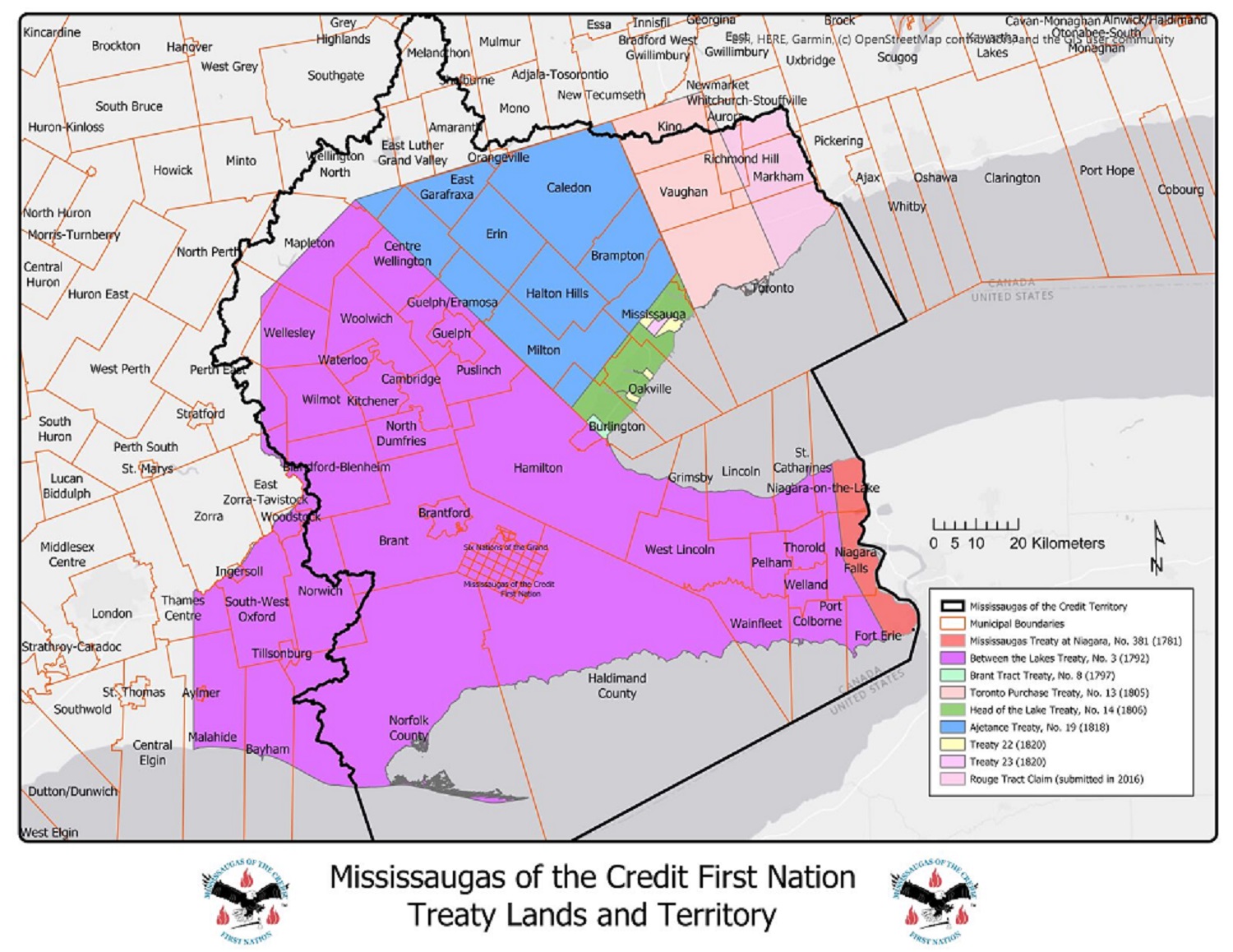
One of Darin’s most influential projects has been mapping the treaty lands and territory of the Mississaugas of the Credit.
These maps help people see something that had previously been invisible.
Wherever someone lives in southern Ontario, they are within a treaty territory connected to the Mississaugas of the Credit.
The maps show which treaty applies to which region, from the Rouge River to Niagara and across the north shore of Lake Erie.
For Darin, the maps are both practical tools and something more meaningful.
They help restore a sense of place.
Driving across the region now feels different for him.
“I kind of get a thrill out of it,” he says. “I know exactly where I am in relationship to the treaties.”
He sometimes jokes that he would love to see treaty territories built into car navigation systems.
“You are now entering Treaty 14 lands of the Mississaugas of the Credit.”
He laughs when he says it, but the idea carries weight. The treaties are not abstract historical documents. They describe relationships that still exist today.
Historically, the Mississaugas were deeply connected to water.
Communities were often located at the mouths of rivers and creeks flowing into the Great Lakes. These waterways shaped travel, fishing, and seasonal life for generations.
But when the Mississaugas relocated to New Credit in 1847, something fundamental changed.
They became landlocked.
Here there are only small creeks. In hot summers, they sometimes dry up entirely.
“That’s the thing I don’t get,” Darin says. “We were always connected to the water. And then we moved here and we’re landlocked.”
For a people whose history was tied to the Great Lakes and river systems, that shift still carries weight.
The community has pursued a water claim aimed at restoring that relationship in meaningful ways. For Darin, the issue is not simply access.
It is about stewardship.
Everything in the natural world is connected, he explains. When one part of the system is damaged or neglected, the imbalance spreads outward.
“We want to see things in balance again,” he says.
That balance is part of a larger responsibility.
For Darin, history is ultimately about memory.
He believes strongly that communities must preserve their own stories. If they do not, those stories disappear or are told by others who misunderstand them.
“We have to be the authors of our own story,” he says.
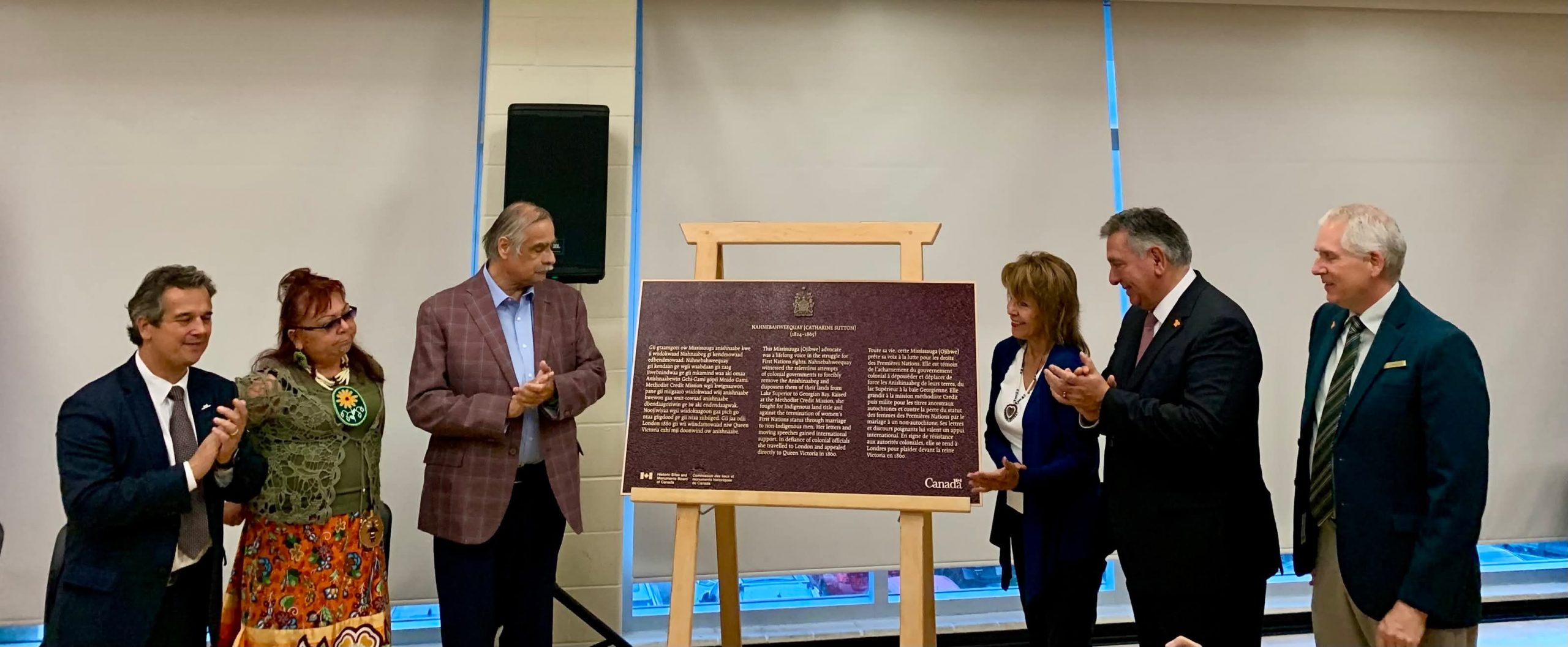
One example of that work can be seen in the story of Nahnebahwequa, an activist from the Credit River Mission who travelled to England to present Indigenous grievances to Queen Victoria.
Darin helped nominate her as a person of national historic significance, a recognition that eventually led to the installation of a commemorative plaque at Marina Park in Port Credit, Mississauga.
Stories like hers matter because they remind us that Indigenous people were shaping events in their own time. They were advocating for their communities and their rights.
And they remain so today.
Darin hopes younger generations will continue learning and sharing the history of their people.
His message to them is simple.
“Know your history,” he says. “Know who we are as a people and be proud of that.”
He also hopes they will take an active role in shaping the future.
“Don’t let things be imposed on us,” he says. “Go out there and impose yourselves on the world.”
For Darin, the work of remembering is not about nostalgia. It is about responsibility.
The treaties that shaped this land were meant to create partnership. Restoring that relationship remains unfinished work.
But Darin continues to do what he has always done.
He keeps teaching.
He keeps telling the story.
Teaching the history of his people, and reminding others of something that should never have been forgotten.
“We’re still here.”