


This promotional cookbook was published by the St Lawrence Starch Co. in Port Credit. Used to promote their corn syrup product, home cooks could buy this convenient ingredient at the store to use in their baking.
Corn syrup was invented by the discovery of glucose in plants. In the early to mid-1800s, glucose was found to be extractable from starch, a carbohydrate in plants like corn, leaving a sweet, thick syrup. This process was cheaper than sugar, which was imported and expensive. High fructose corn syrup is heavily used today in foods manufacturing, but the use of glucose corn syrup for some recipes at home is still the norm, it’s best to sweeten any recipe that sugar granules would negatively affect like sauces, glazes, and icings.
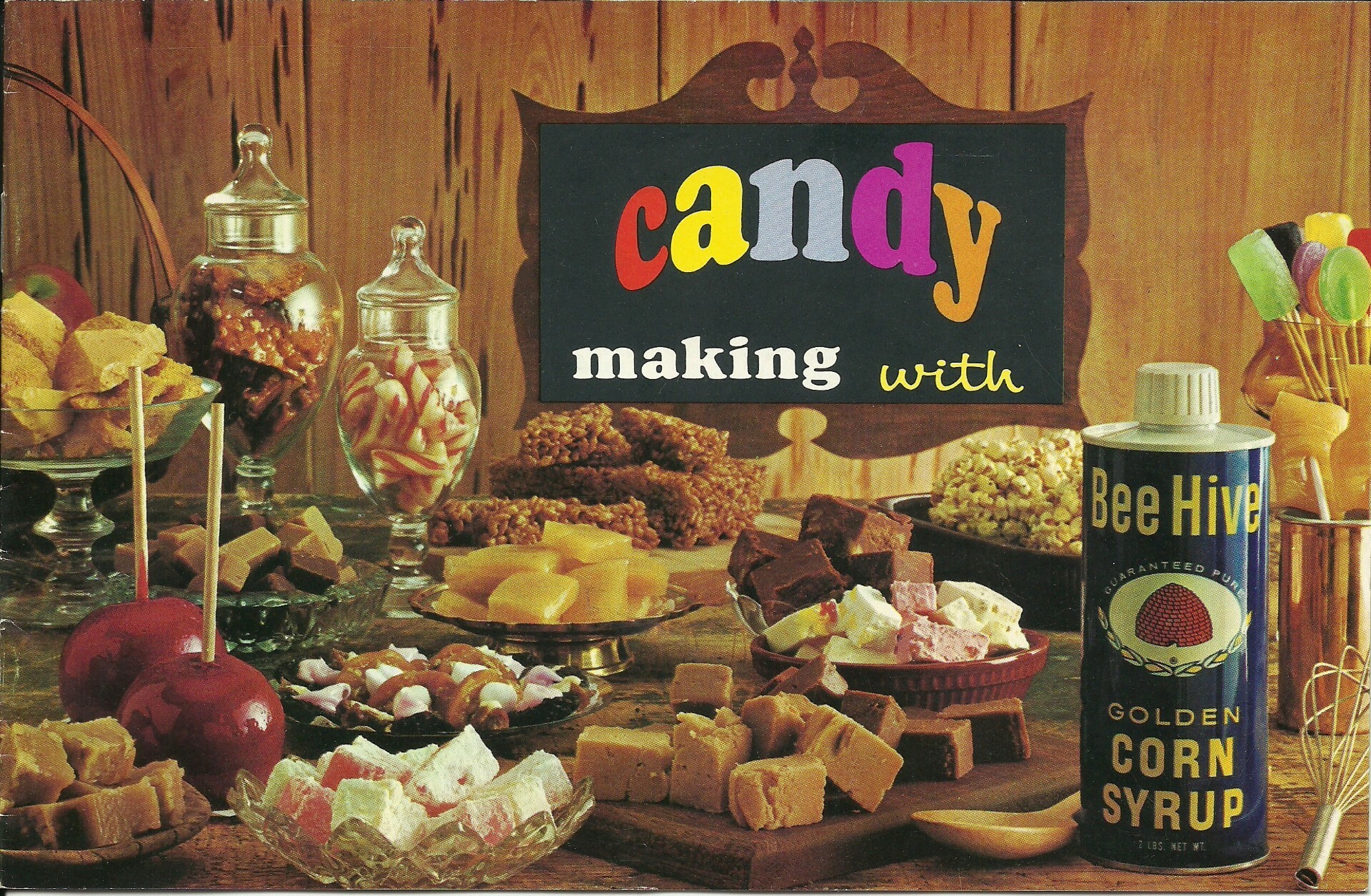
Candy Making with Beehive Golden Corn Syrup Cookbook
St. Lawrence Starch Co.
About 1965-1980
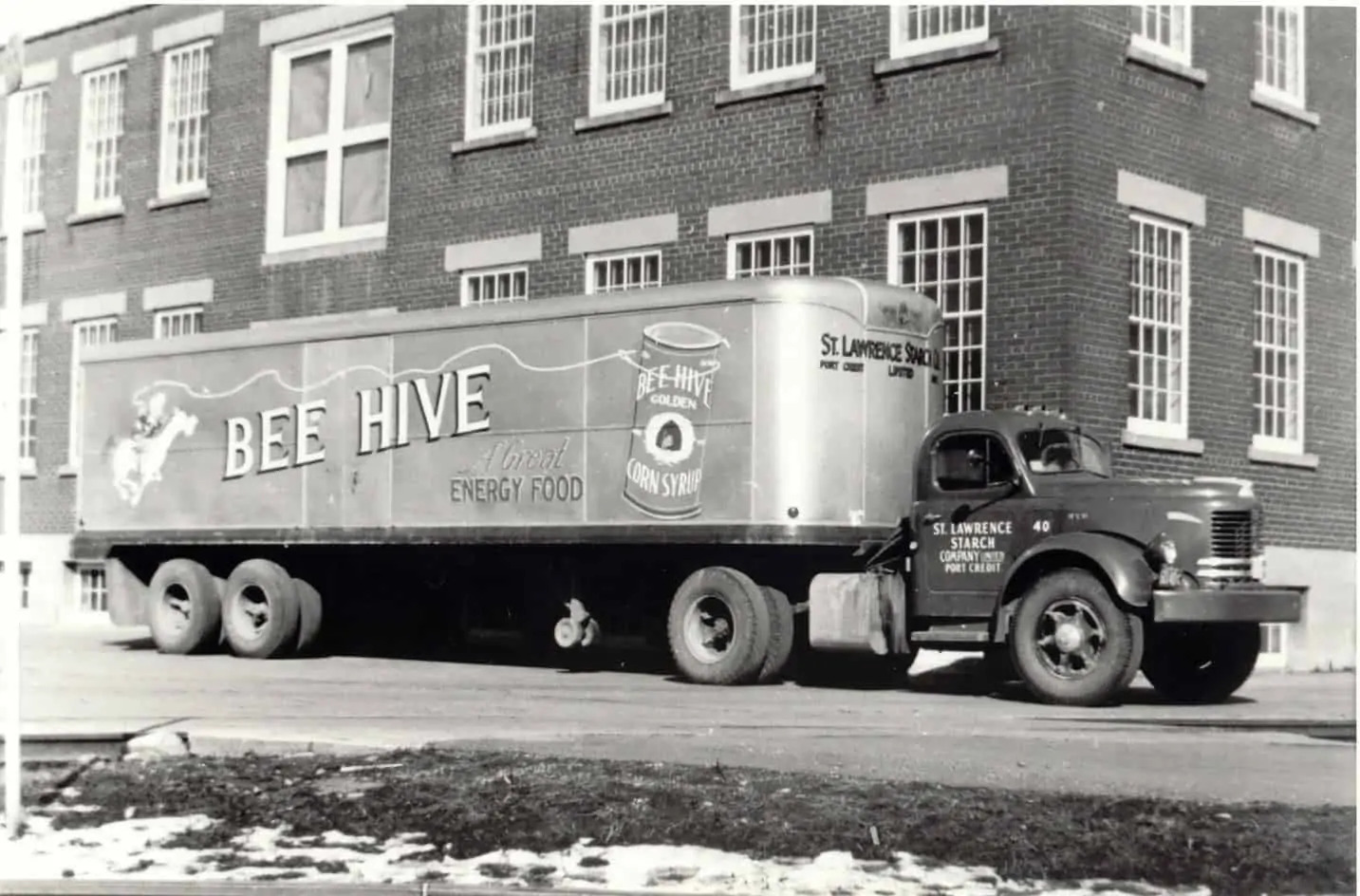
St. Lawrence Starch Co. Transport truck for their Bee Hive Golden Corn Syrup, about 1950.
From insauga.com.
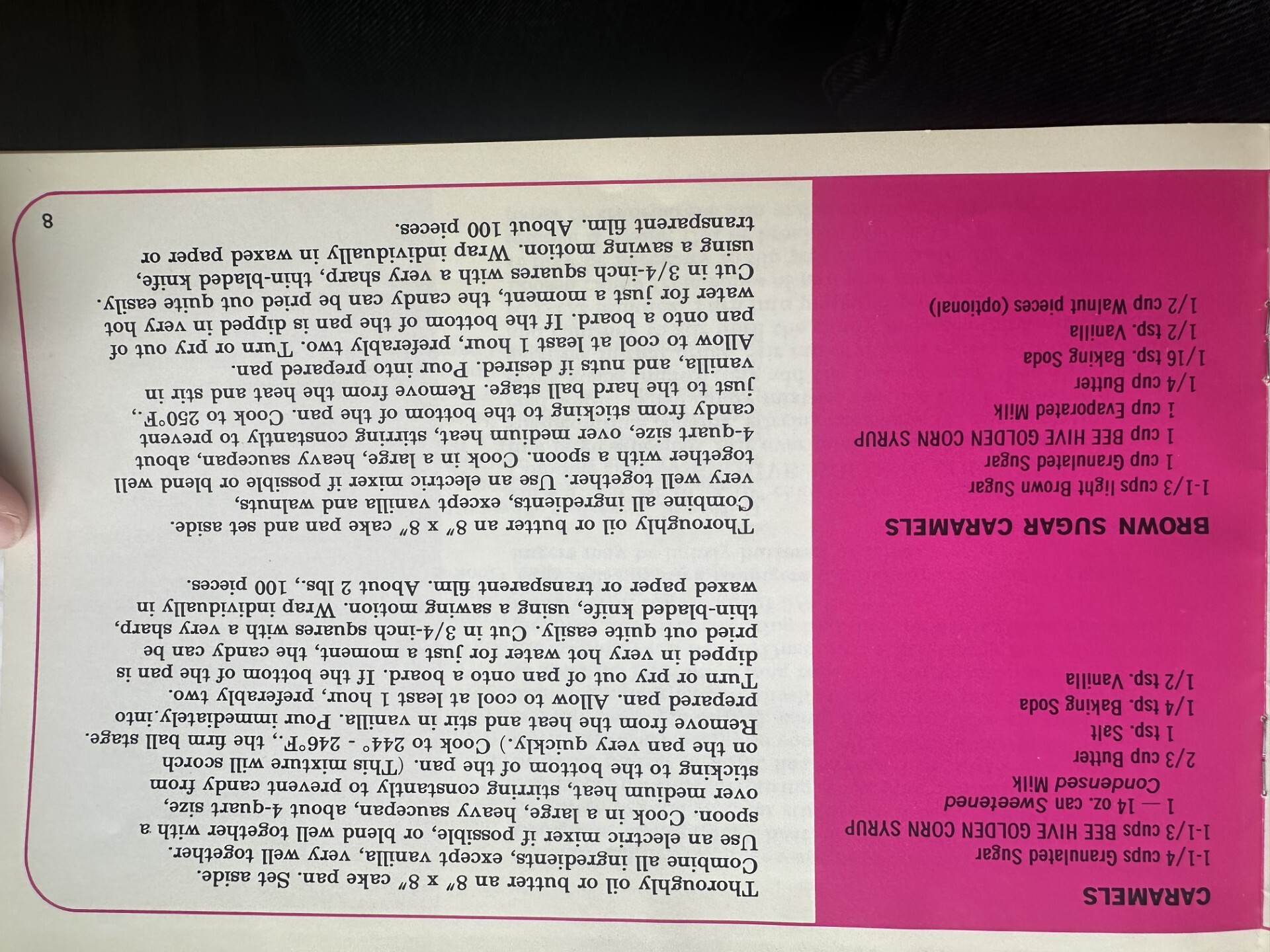
Recipe for Caramels and Brown Sugar Caramels on page eight of the Bee Hive Corn Syrup cookbook. Give one a try!
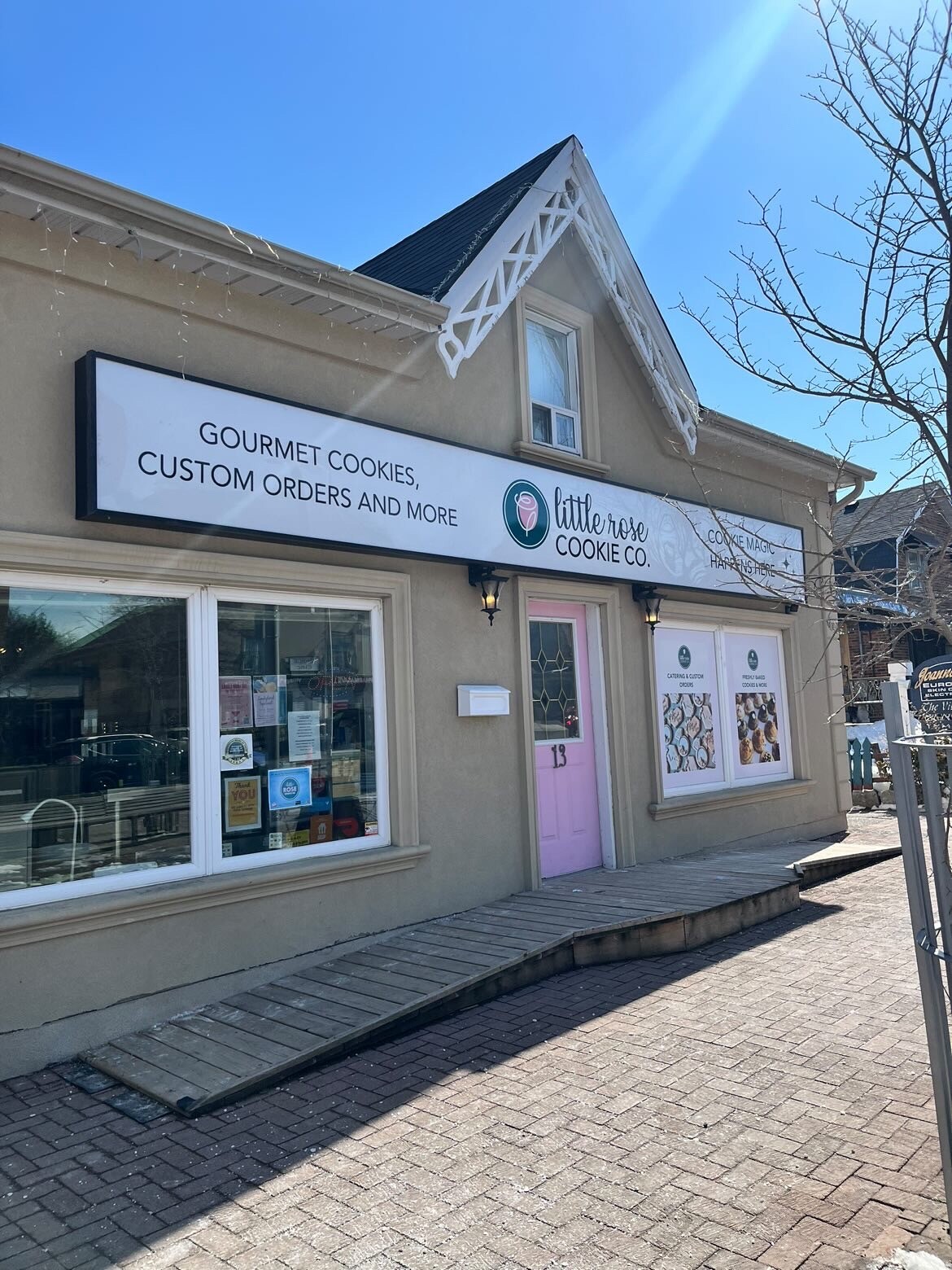
Visit Little Rose Cookie Co. on Main St. in Streetsville, a women-owned business that sells handcrafted cookies including custom sugar cookies!
From Little Rose Cookie Co.
This community cookbook was put together for the 1982 Bread & Honey Festival held to commemorate the founders of Streetsville back in the early 1800s. The festival still takes place on the first weekend of June every year!
The first type of bread in Canada was brought by Europeans in the early 1700s, what we know today as bannock, and through forced adoption, is now a staple in Indigenous culture. Hand-milled flour was used in breadmaking until flour mills began to sell their products in stores to home bakers, then commercial bakeries began to sell pre-made loaves. In 1900, it is estimated that only 8% of people purchased pre-made bread. By the 1960s, more than 95% of people bought their bread along with other baking products from commercial bakeries and stores.
McCarthy Milling Co. and Reid Milling Co. are historic grain mills here in Mississauga. McCarthy Milling Co. began in the 1930s, and Reid Milling Co. was founded in the mid-1830s with multiple owners over the years, operating under Ardent Mills today. See the heritage plaque commemorating Reid Milling outside the mill!
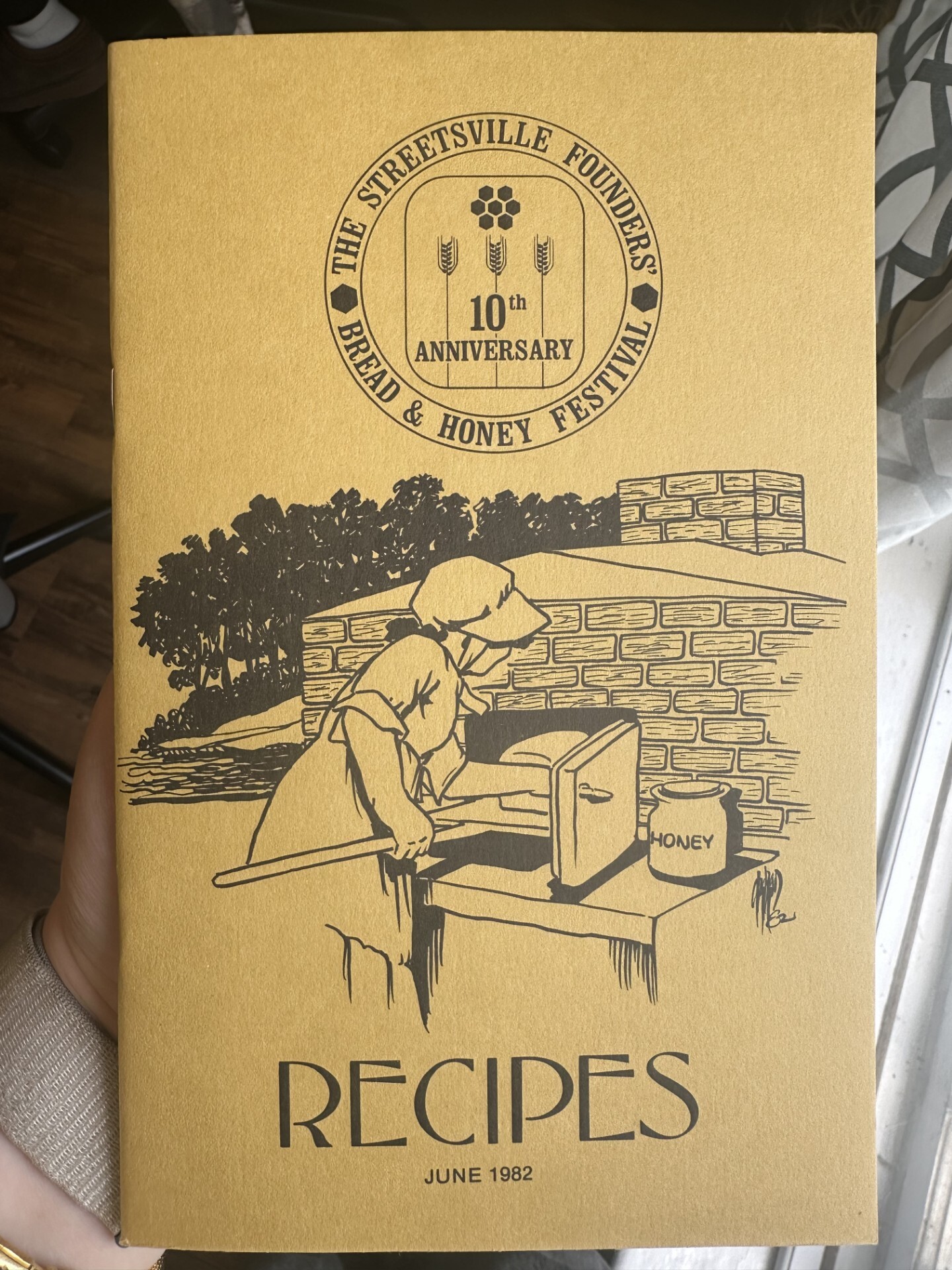
The Streetsville Founders’ Bread & Honey Festival Recipes
Compiled by the Festival Committee
1982

This recipe is found within the Bread & Honey Festival Recipe book, submitted by community member Pearle Ellis. Try your hand at homemade bread and get creative with spreads and sandwich toppings!
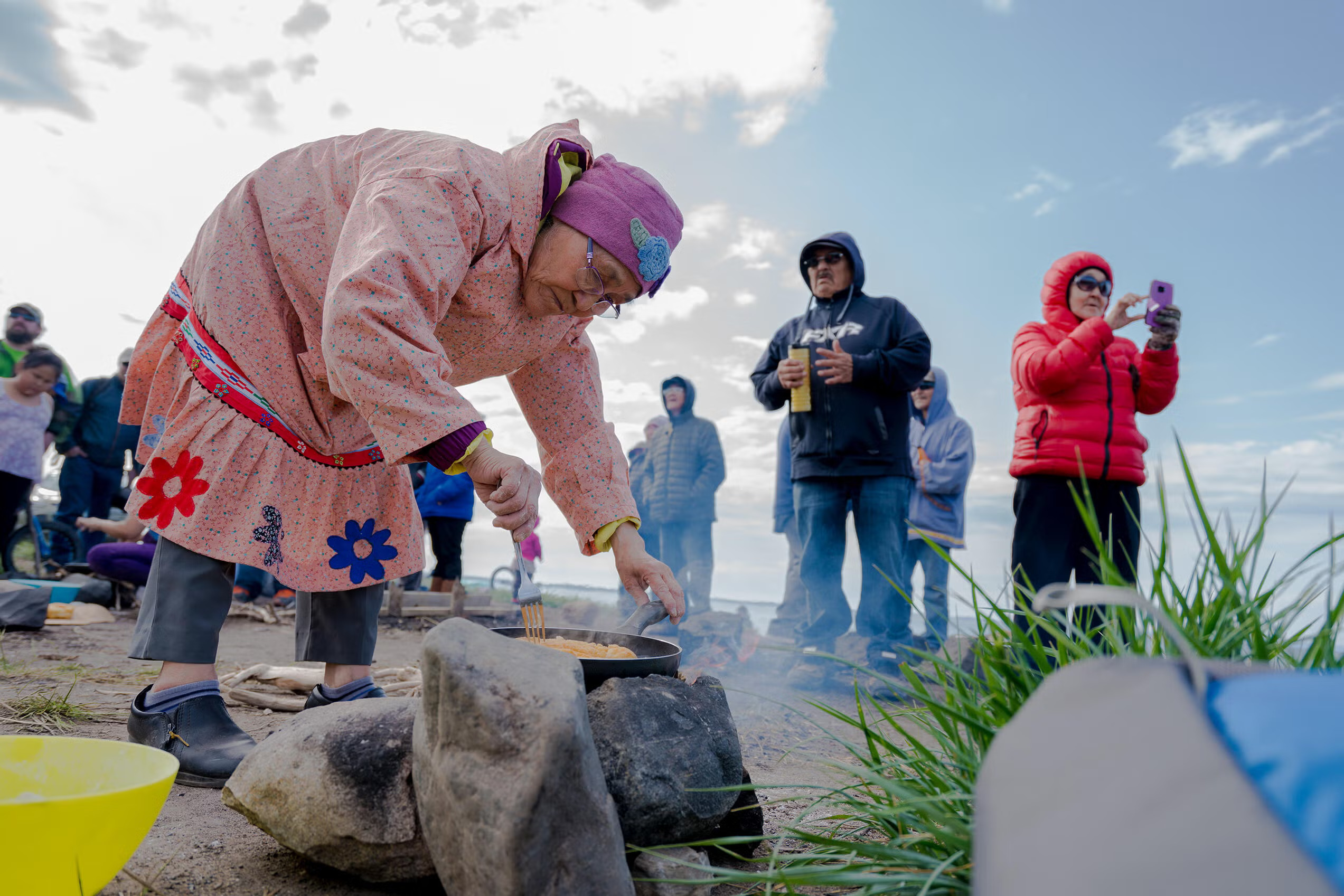
Making bannock.
From destinationnunavut.ca.
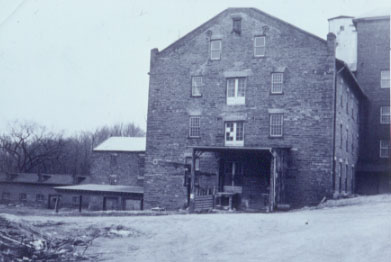
McCarthy Milling Co., photographed about 1978. The building was originally built in 1861 and operated as a textile mill before being purchased by McCarthy Milling Company in 1931. It still operates as a grain mill today under ADM Agri Business Ltd.
From mississauga.ca.
This UniveX model C8 8mm cine camera, was owned and donated by John Hammill of Mississauga.
The 8mm film shot black and white motion picture — the 30ft spool of film capturing about two minutes of footage (with the option to combine up to eight reels when developed) would then be viewed on a projector.
Mississauga is not new to filmmaking, serving as prominent filming locations since the 1980s, with the industry expanding out of Toronto. Part of David Cronenberg’s 1988 classic Dead Ringers was filmed here as well as Guillermo Del Toro’s Netflix miniseries Cabinet of Curiosities, filmed at Museums of Mississauga’s Benares House, also The Handmaid’s Tale filmed at multiple locations across the city including UTM buildings and the amphitheater at Celebration Square, to name a few.
Fortunately, just like the users of the UniveX movie camera 80 years ago, filmmaking can be done at any level. If you have a camera on your phone and have taken video, you’re a filmmaker! Think of new and creative ways to document aspects of life you find interesting.
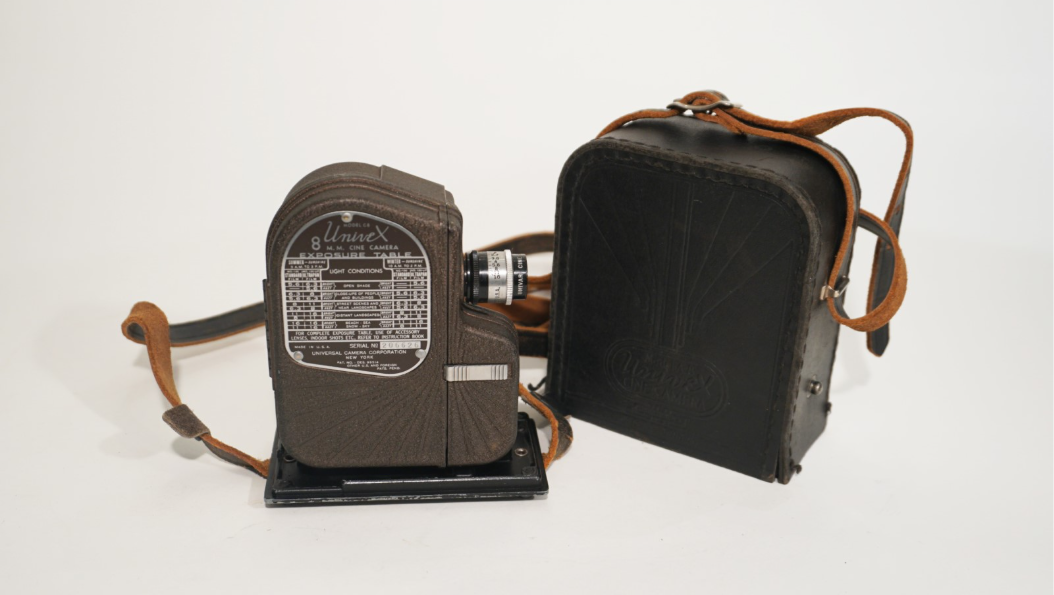
Home Motion Picture Camera
UniveX, New York
About 1940

Filming Handmaid’s Tale at the amphitheater at Celebration Square, 2018.
From mississauga.ca.
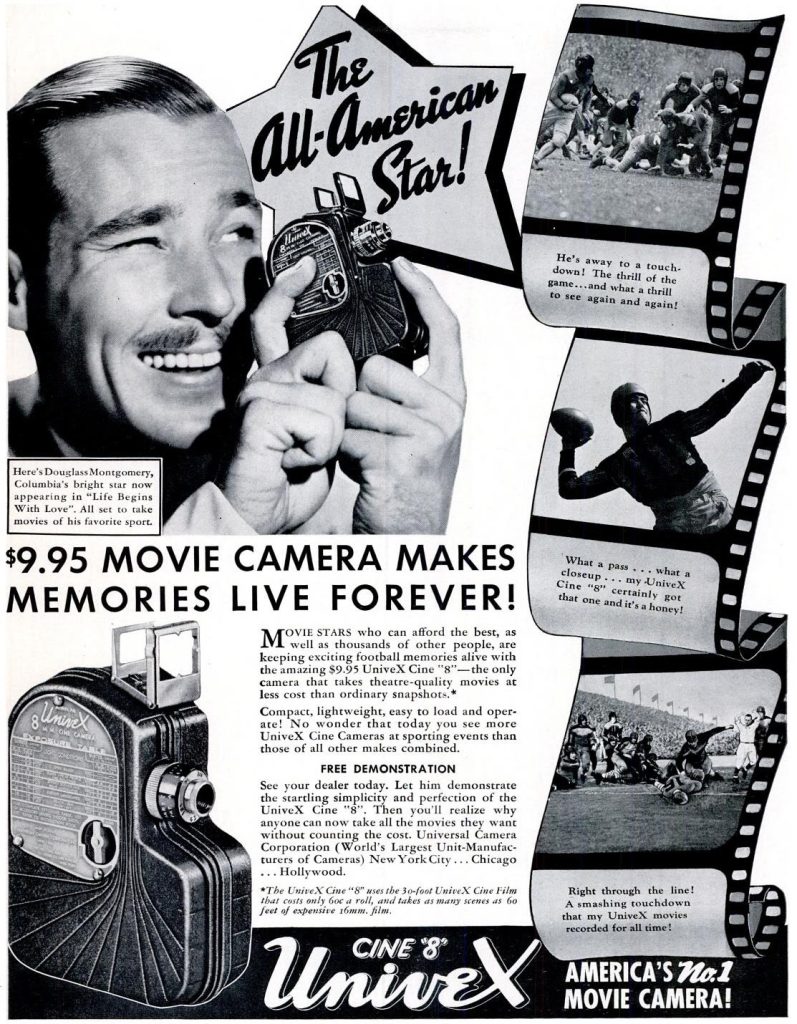
Advertisement for the UniveX 8 series camera in the April 1938 issue of Popular Photography. The series of cameras were priced and advertised as the best home movie cameras of the time.
From mikeeckman.com.
This pocket-sized spirit (bubble) level would have been used in carpentry around the Greeniaus Farm in historic Clarkson.
The spirit level is thought to be first invented in France in 1666. Called a spirit level because of the fill of alcohol in the glass vial, allowing the level to be used in any environment and protect against freezing. During the 1700s and 1800s, the spirit level was standardized, and the glass vial set in a wooden frame like this one, became readily available. The ability to level quickly became important to safely build and construct booming cities and rural towns. Spirit levels have become useful in large-scale construction projects as well as household toolbox staples.
Whether it was hanging a picture or constructing a DIY project, what was the last thing you made?
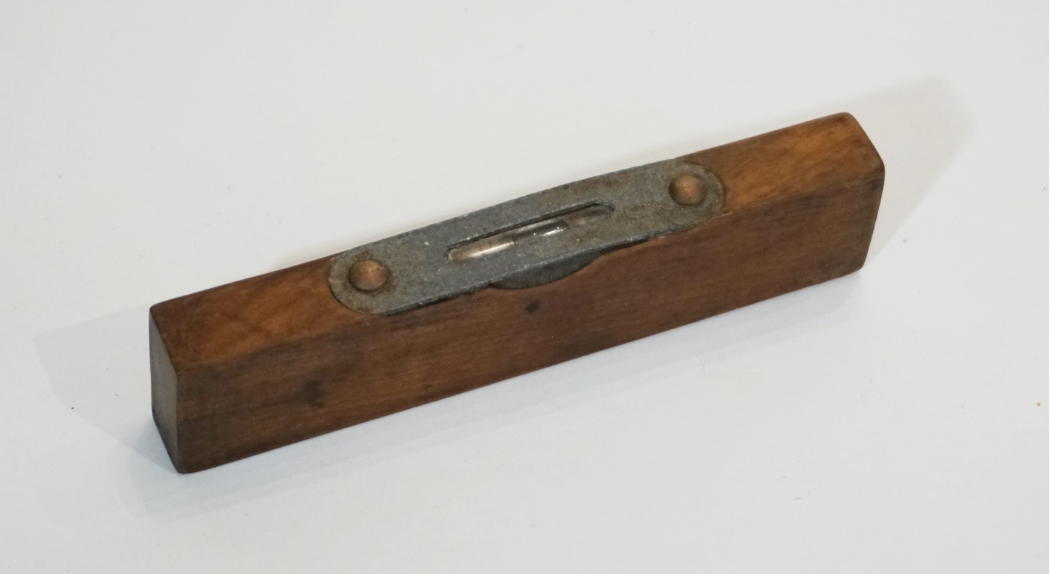
Pocket Spirit Level
About 1900
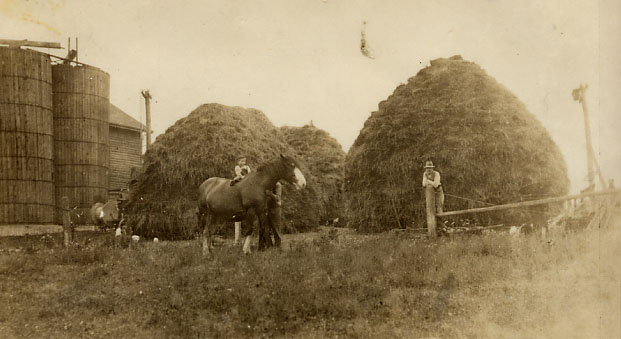
Working the Greeniaus farm in Clarkson, about 1900.
From www.mississauga.ca.
Although construction across our city may seem tedious at times, it can result in many important projects and developments. Newly opened, the Jim Tovey Lakeview Conservation Area sits directly west of Marie Curtis Park. Constructing the conservation area has now been completed after 10 years, featuring a beautiful lakeshore trail and wetlands for wildlife to thrive.
From todocanada.ca.

This Army and Navy Needle Book once belonged to the Copeland family of Cooksville.
Military themed needle books like this one were produced during and after the Second World War. They were marketed to civilians, capitalizing on the idea of repair that soldiers had to do during wartime.
Hand sewing was once a necessary skill for all young girls to learn. Making and mending clothes for the family was one of the many tasks of women throughout history. With the invention of the sewing machine and monetarily accessible mass-produced clothing, this widespread skill fell out of fashion. Today, some may keep a similar needle kit for quick clothing repairs or as a creative hobby.
Learning to sew, crochet, knit, quilt, embroider, or any combination of these can not only be a creative outlet but also reduce textile waste by repairing what we have or making our own. Try your hand at any of these and see what you can create!
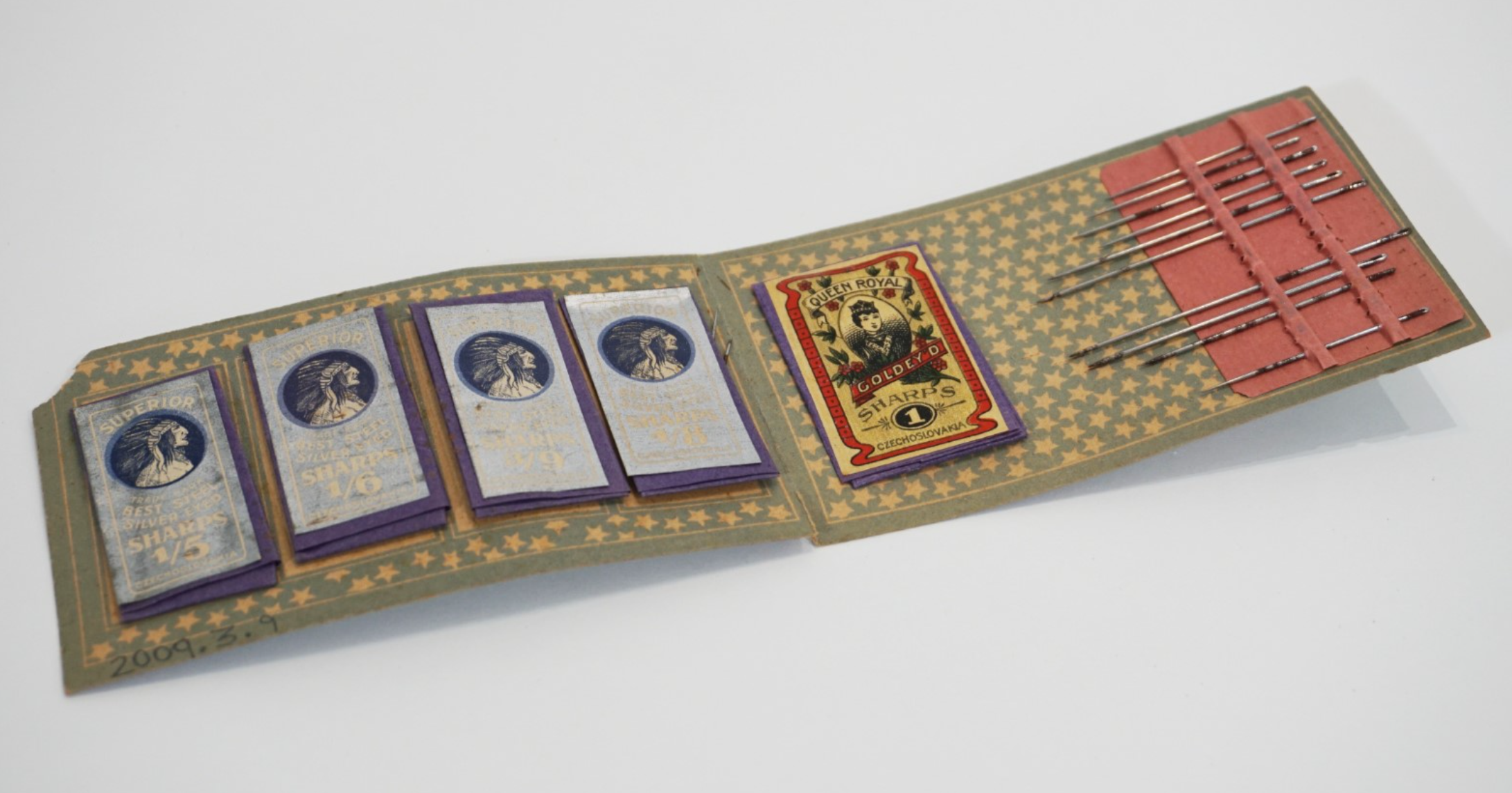
Queen Royal Gold Ey’d Sharps Sewing Needle Book
Made in former Czechoslovakia
About 1945
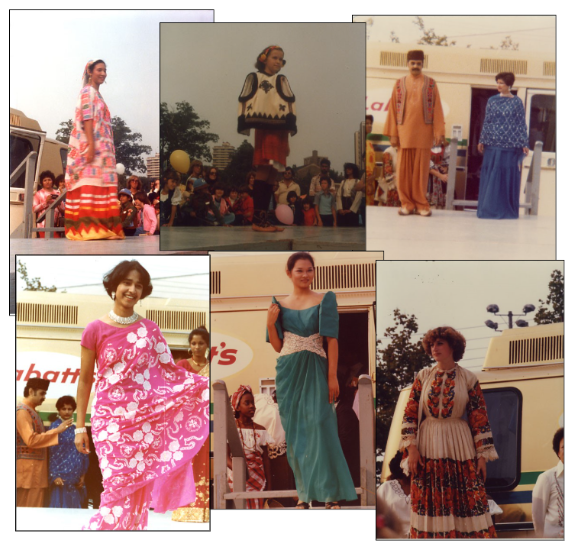
Collection of photographs from the 1978 Fritterfest Fashion Show in Mississauga. From left to right, top to bottom, shows cultural dress from Southern Mexico, Ukraine, Pakistan, India, Philippines, and Croatia. Likely, all these clothing feature hand-sewing in some way.
From mississauga.ca and Maurice J. Pinto.
This inkwell from the Greeniaus family would sit in a designated spot on a writing desk or a tabletop holder. Probably used with a steel point fountain pen, the user would dip into the small amount of ink at the bottom of the reservoir and dab off on the central raised area. Once the reservoir pen became widespread around 1930-1950, inkwells fell out of use.
Many things could have been written using this inkwell; letters and correspondence, business dealings, bookkeeping, personal writing, and more.
Visit any Mississauga Public Library branch with your library card to borrow books, media, and more. You may also attend free writing workshops with the Writer’s Collective of Canada held across Ontario and virtually.
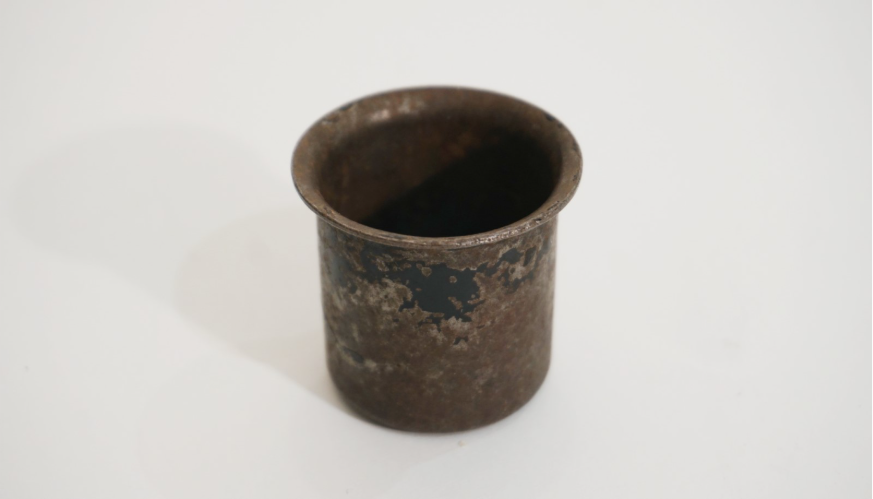
Inkwell
About 1850-1900
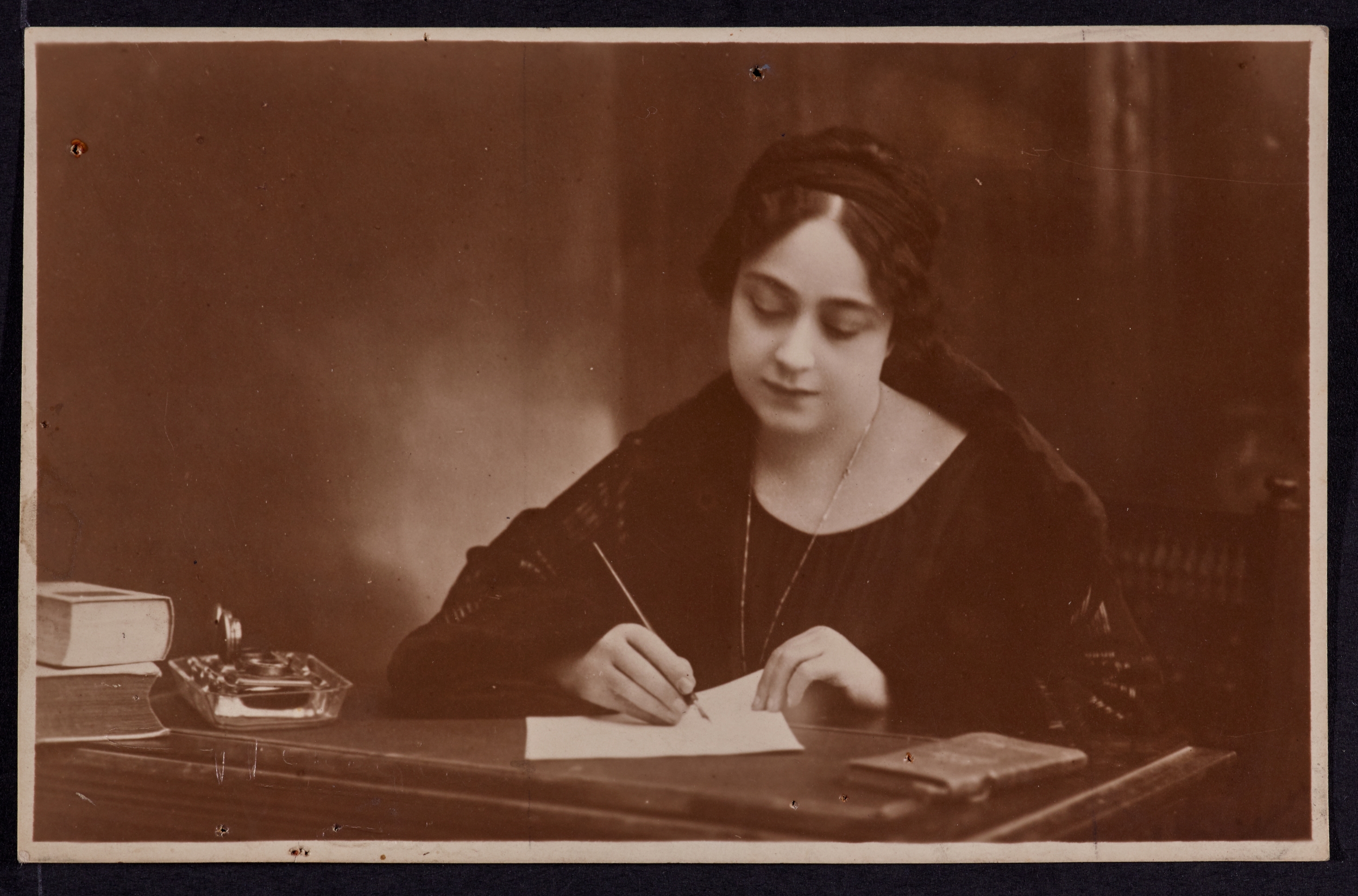
A photo on a postcard of a woman writing using a fountain pen and an inkwell to her right, about 1920.
From flikr.com, photographer most likely G. Lekegian.
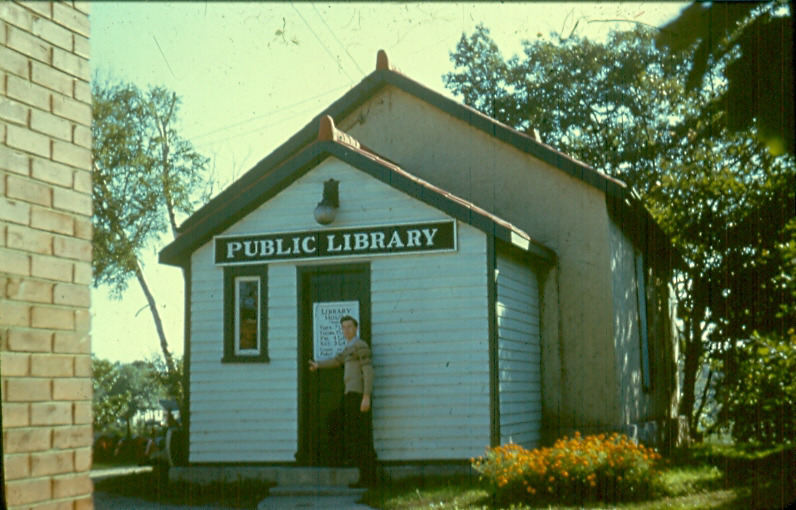
The former Port Credit Public Library, about 1960.
From Heritage Mississauga archives.
This wick trimmer, from the early 1800s and owned by the Greeniaus family of Clarkson, would have been used to trim off the burnt portion of a candle wick as the candle burned since the wick did not burn down like modern candles. The box atop the scissors would catch and hold the smoldering wick. It even has little feet to sit cleanly off a surface when not in use — it may have even had a dedicated tray to sit on.
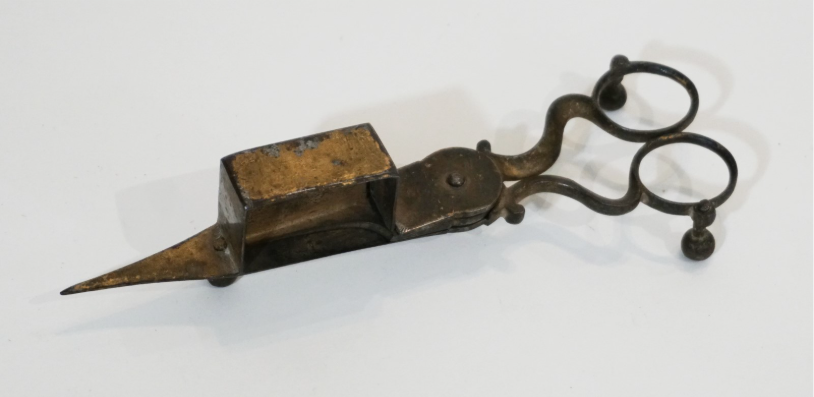
Wick Trimmer
About 1800-1850
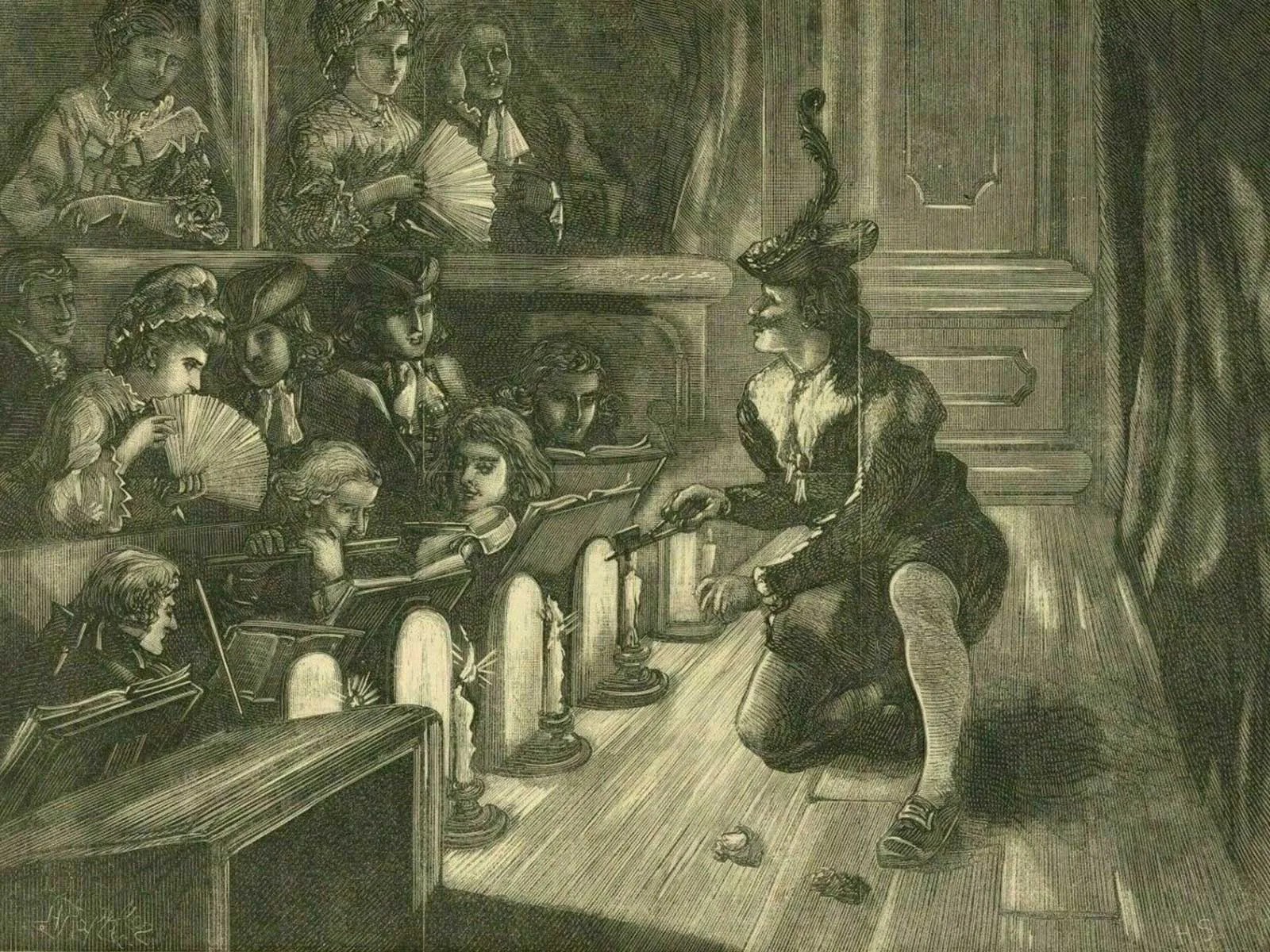
Image of a ‘snuffer man’ working at a theatre in the late 1700s tending to the candles with a wick trimmer.
From nationalmuseum.ch.
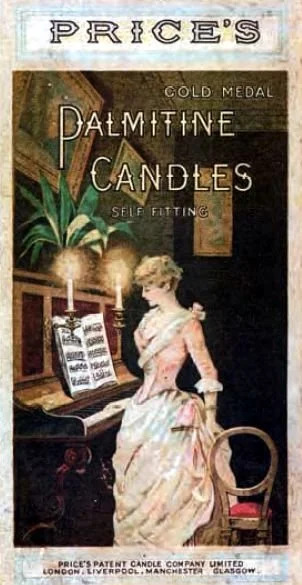
An advertisement for self-fitting, self-consuming modern candles. Around 1820, wicks were invented with cotton and braided in such a way that the burnt portion curled back into the flame to continue to burn off, no longer requiring a trim.
From ashwoodcandles.co.uk.
This cherry pitter was used to allow pitting the fruit while remaining whole. First, the stem is removed, then the device is held with the user’s thumb in the moving part and fingers in the loops, and the plunger is driven through the cherry in a way that the stone is ejected out the other side.
When baking with or preserving cherries and needing to remove the stones, there was a need to create a tool that was quick and clean — this simple device does the trick!
Invented tools like these were made to make a task easier, but they can also be part of making. The making of a cherry pie or the making of skills and memories by having your child join in and carefully pitting the cherries by your side.
What tool or invention have you made or used to simplify a task or make something possible?
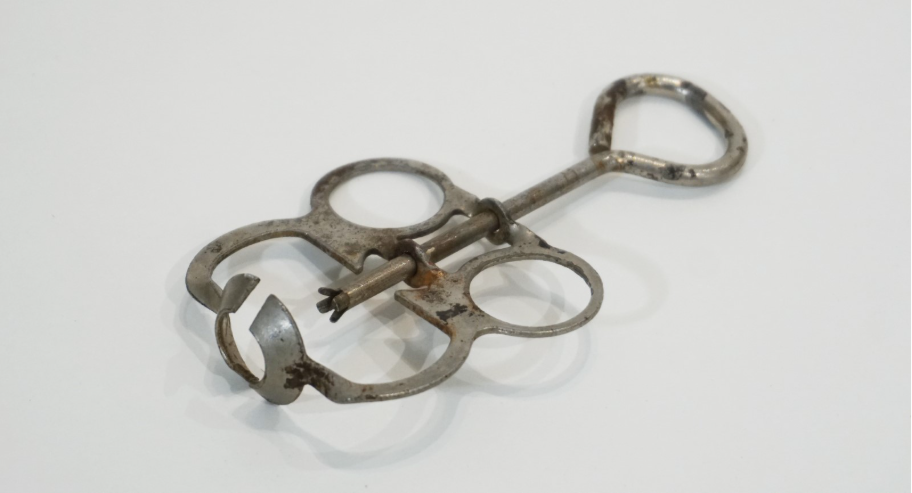
Cherry Pitter
About 1950
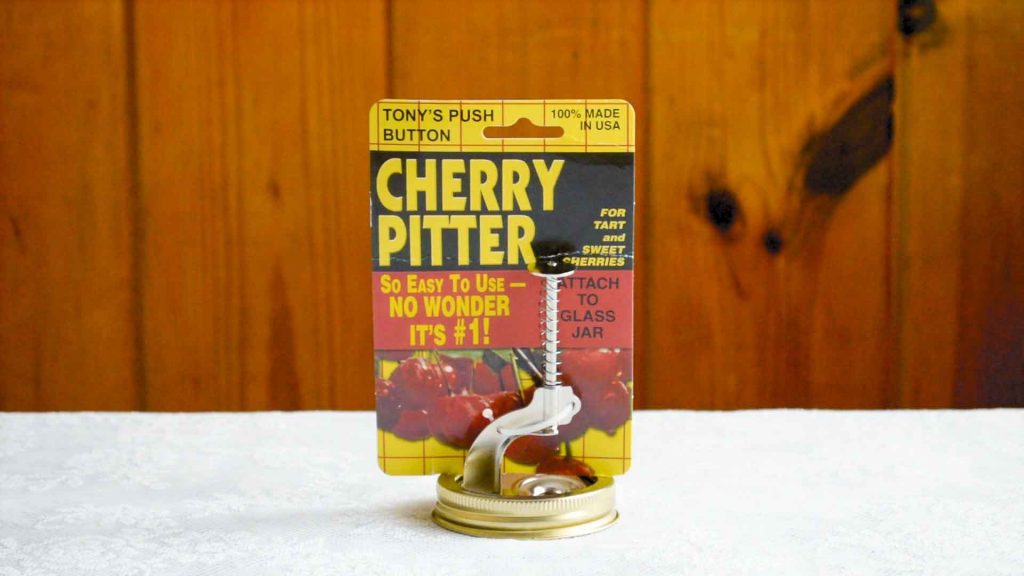
This cherry pitter gadget called Tony’s Push Button screws onto the top of a mason jar. The push button punches through the fruit, and the pit drops into the jar. It has remained unchanged since its invention by Otto Krasberg in 1938.
From craftrevue.com.
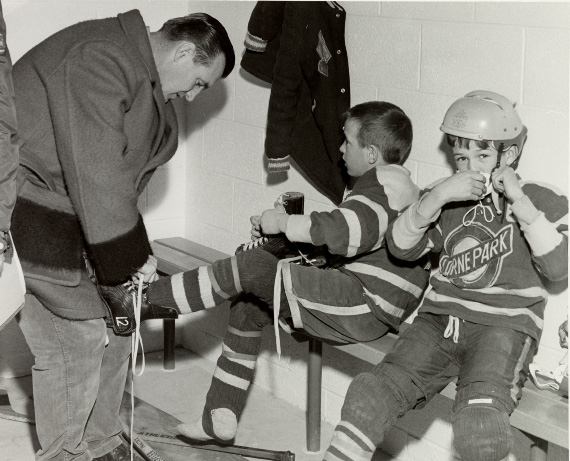
Speaking of inventions, Mississauga is home to the makers of the modern protective hockey helmet. Developed from European designs, Charlie Patterson and Arthur Wood of Cooksville created the hard plastic helmet that gives protection from all the game has to offer. Pictured is a child securing his in anticipation of playing during the Toronto Township Hockey League Christmas Party at Dixie Arena, 1960.
From mississauga.ca.
This set of lawn bowls was most likely originally owned by Adrian and Gladys Naish of the Naish family of Port Credit. Games like lawn bowling bring people together to entertain and make memories.
Lawn bowling has a long history, dating back to ancient Egypt, and the rules have remained relatively unchanged. It gained traction in England in the 1200s and then had a resurgence in Scotland in the mid-1800s, creating memories throughout time.
Think about your next building of a memory — who will you visit, what will you do?
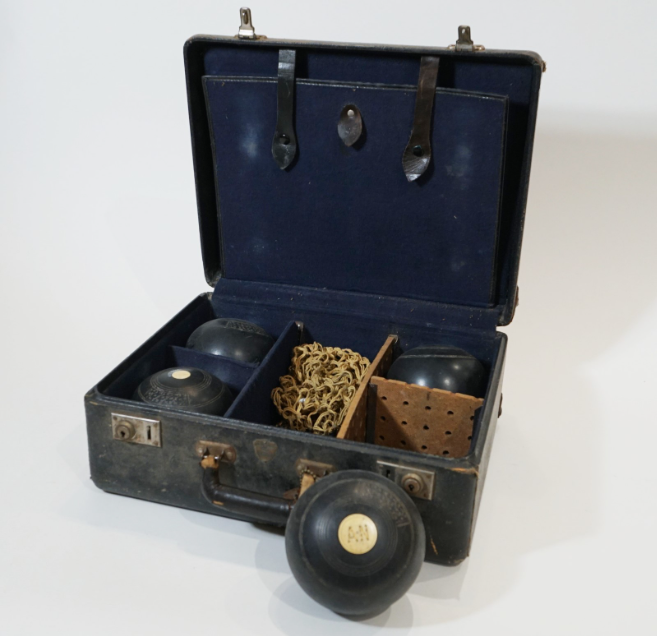
Lawn Bowls and Case
McBrine Baggage (case)
Around 1950
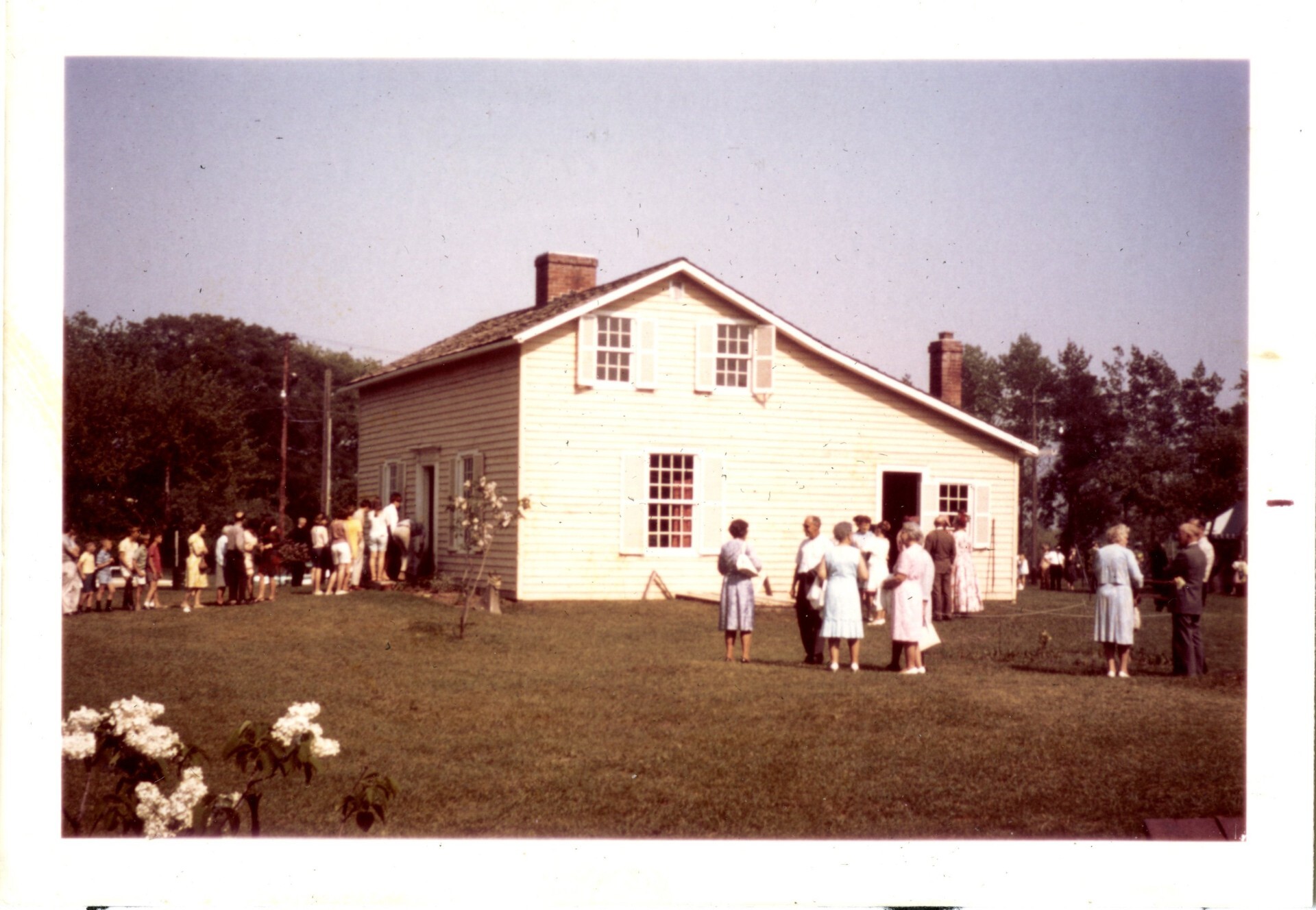
Guests attending the opening of Bradley Museum, 1967, where this set of lawn bowls was played.
From Museums of Mississauga collection.
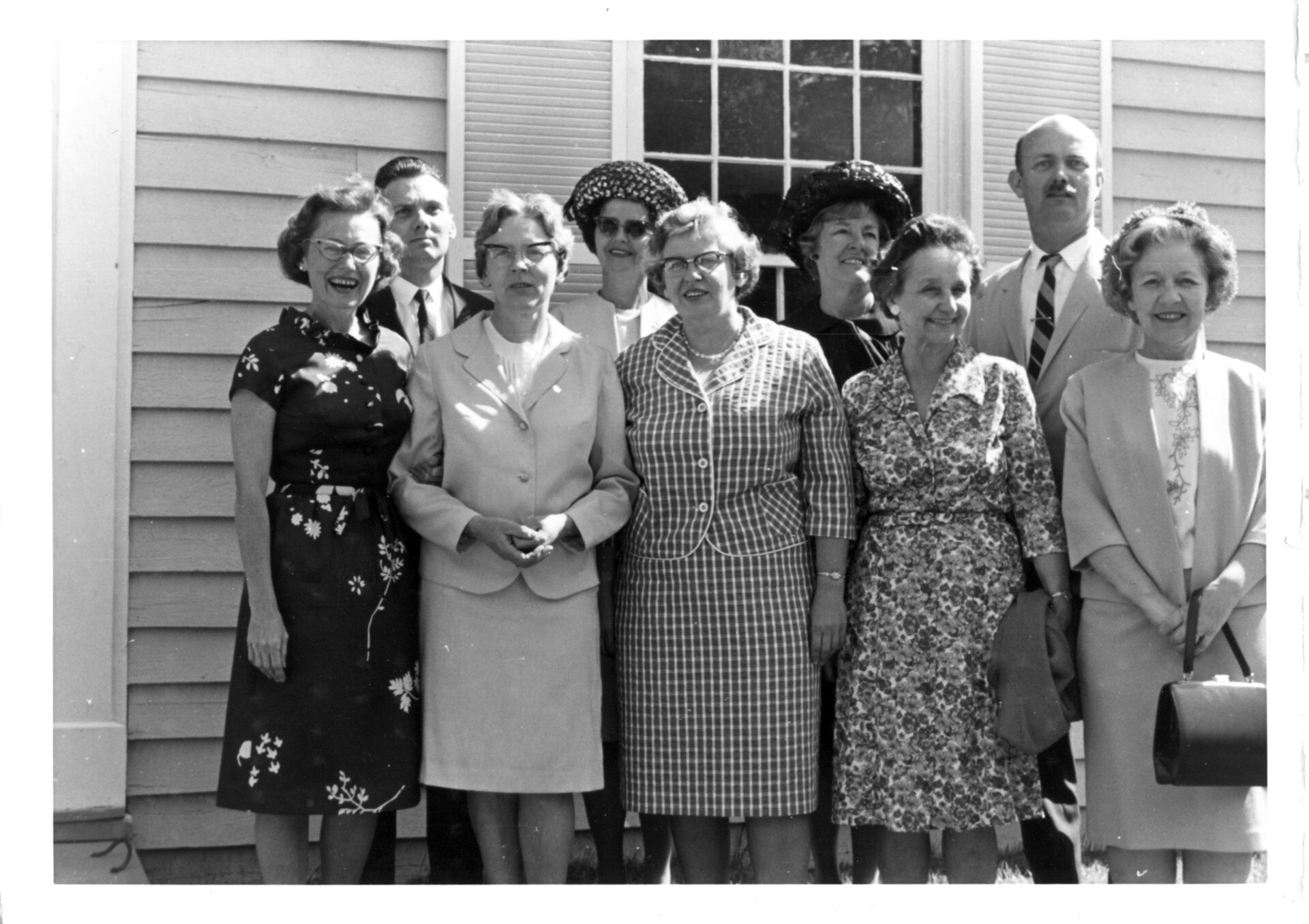
Attendants of the opening of Bradley Museum, 1967. Margaret Naish, daughter of Adrian and Gladys Naish is in front row, centre.
From Museums of Mississauga collection.
These short day gloves, made of kid leather, would have been a staple in their owner’s wardrobe.
Gloves have been worn throughout time for various reasons. They were a large part of vast Victorian and Edwardian etiquette with different gloves needing to be worn at different times and places. Kid leather gloves like these were thought to be of the highest quality and used not only for modesty and fashion but also a symbol of class. They would fit over the hand like a second skin with snaps securing them at the wrist. They could have been a lovely gift to their owner, creating a thoughtful memory between people.
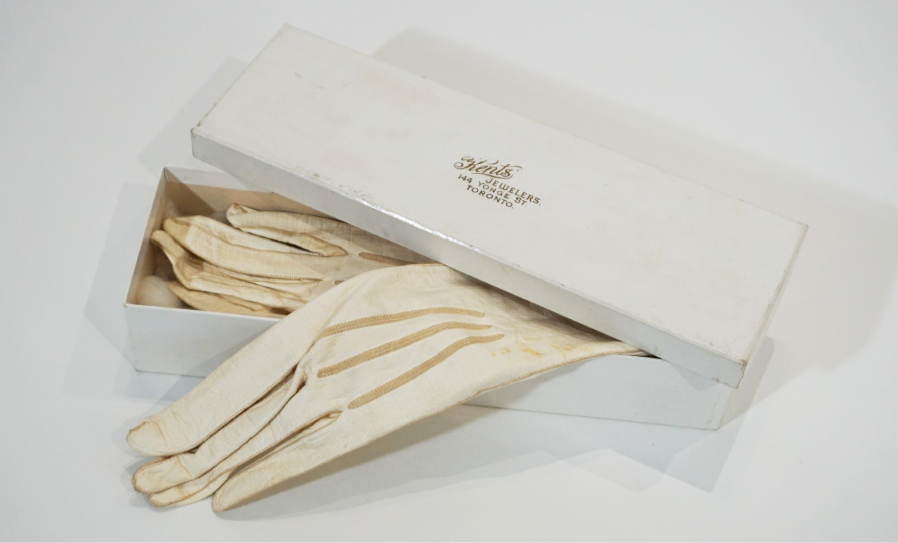
Gloves
About 1920
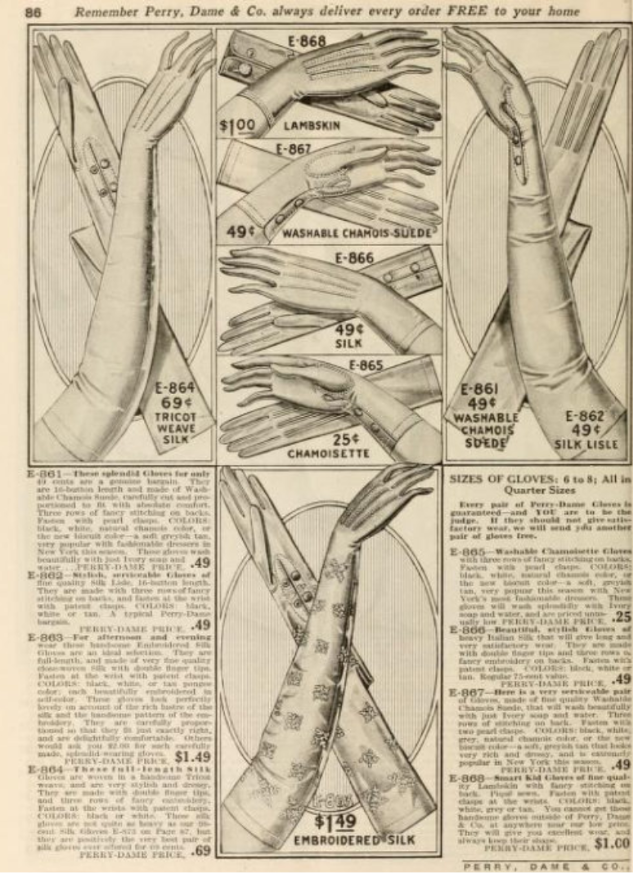
An advertisement for both short day (middle) and longer evening (outer) gloves in different materials, about 1915. The “lambskin” or kidskin day gloves at the top are very expensive compared to the others at $1.00.
From vintagedancer.com.
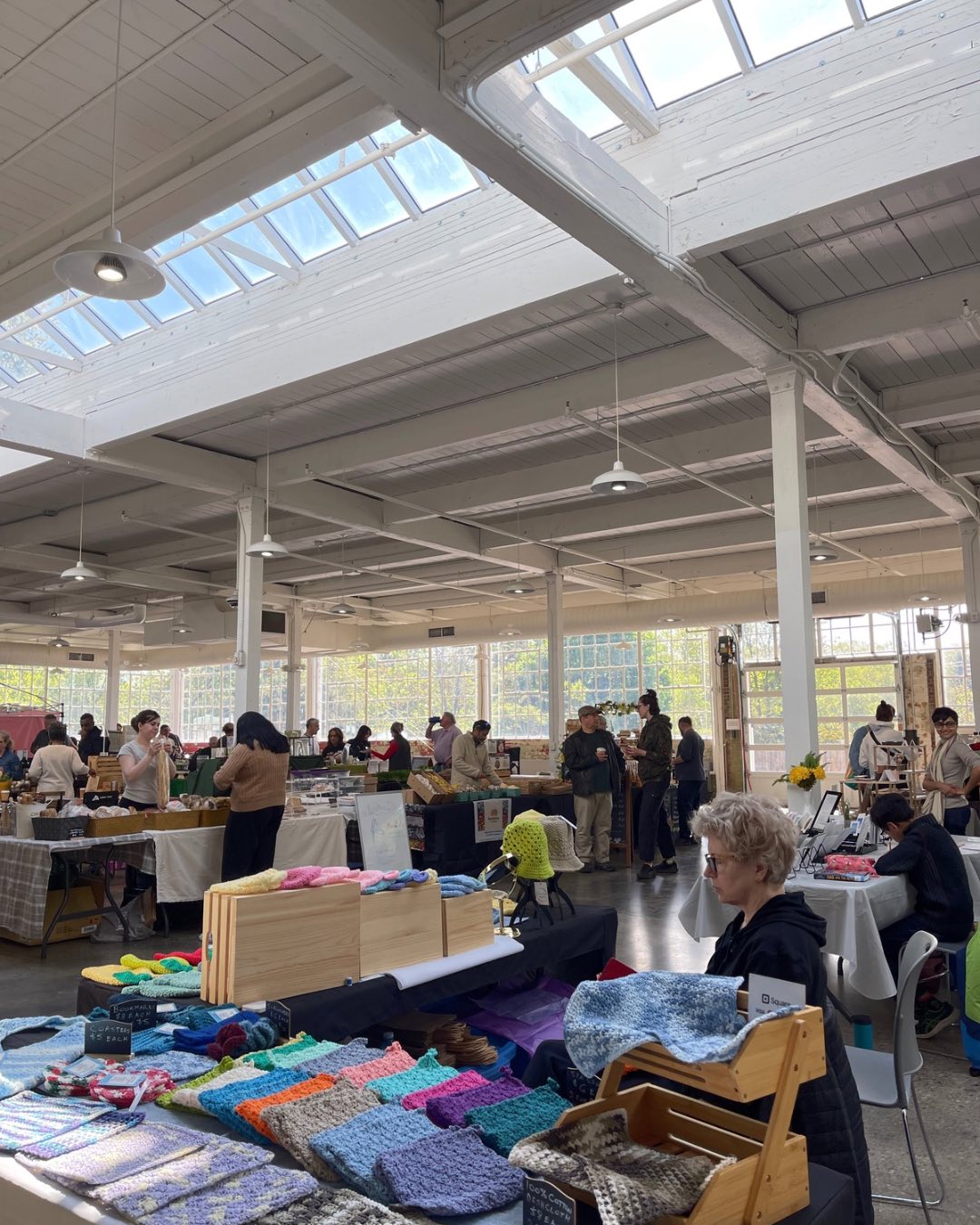
Make memories and shop locally at the Lakeview Craft Market held every other Sunday at the Small Arms Inspection Building on Lakeshore Road from May 26-Oct 27. You might find a special gift like these gloves!
From mississauga.ca.
Uncovering the History of Corn Syrup in Our Food: A Sweet and Surprising Story – CookingIsCool
Our Story | Little Rose Cookie Co.
Photo: The massive factory that once stood at Lakeshore and Hwy 10 in Mississauga | INsauga
The history of Mississauga’s Reid Drive — Modern Mississauga Media
Way Back Wednesday: The History of Mississauga’s Barbertown Road – Heritage Mississauga
Baking Industry | The Canadian Encyclopedia
Bannock | The Canadian Encyclopedia
Photo: How To Make Bannock | Destination Nunavut
James’s Camera Collection: Univex C8
Free manual from www.Butkus.us
Chapter 19: Filmmaking – We Built This City
Where was The Handmaid’s Tale filmed? Guide to ALL the Locations
Photo: Mississauga: As Seen on TV – City of Mississauga
Who Invented the Spirit Level? History & Evolution | Kapro
Photo: Mississauga Historic images gallery
Photo: What to See and Do at the New Jim Tovey Lakeview Conservation Area at Mississauga Waterfront
“Make It Yourself”: Home Sewing, Gender, and Culture, 1890-1930 | Chapter Three
Photos: Mississauga Historic images gallery
Pieces of the Past | Naval History Magazine – April 2015 Volume 29, Number 2
What Did Victorians Use To Write? – Ontario Bakery
Photo: The Art of Writing | A lovely photograph/postcard from the S… | Flickr
In the days when candle wicks still had to be trimmed…
Behind the Design: Candle Wick Trimmers Then and Now – SolidSmack
Photo: In the days when candle wicks still had to be trimmed…
1982.54.1 – Pitter, Cherry | Wellington County Museum & Archives
This Nostalgic Kitchen Tool Will Warm Your Heart! – Good Old Days
Chapter 25: Hockey Helmet and Mouthguard – We Built This City
Photo and info: push-button cherry pitter in-depth: vintage kitchen – craft revue