

A HERITAGE MISSISSAUGA PROFILE ON SIDNEY GENDRON
WRITTEN BY: MEGHAN MACKINTOSH
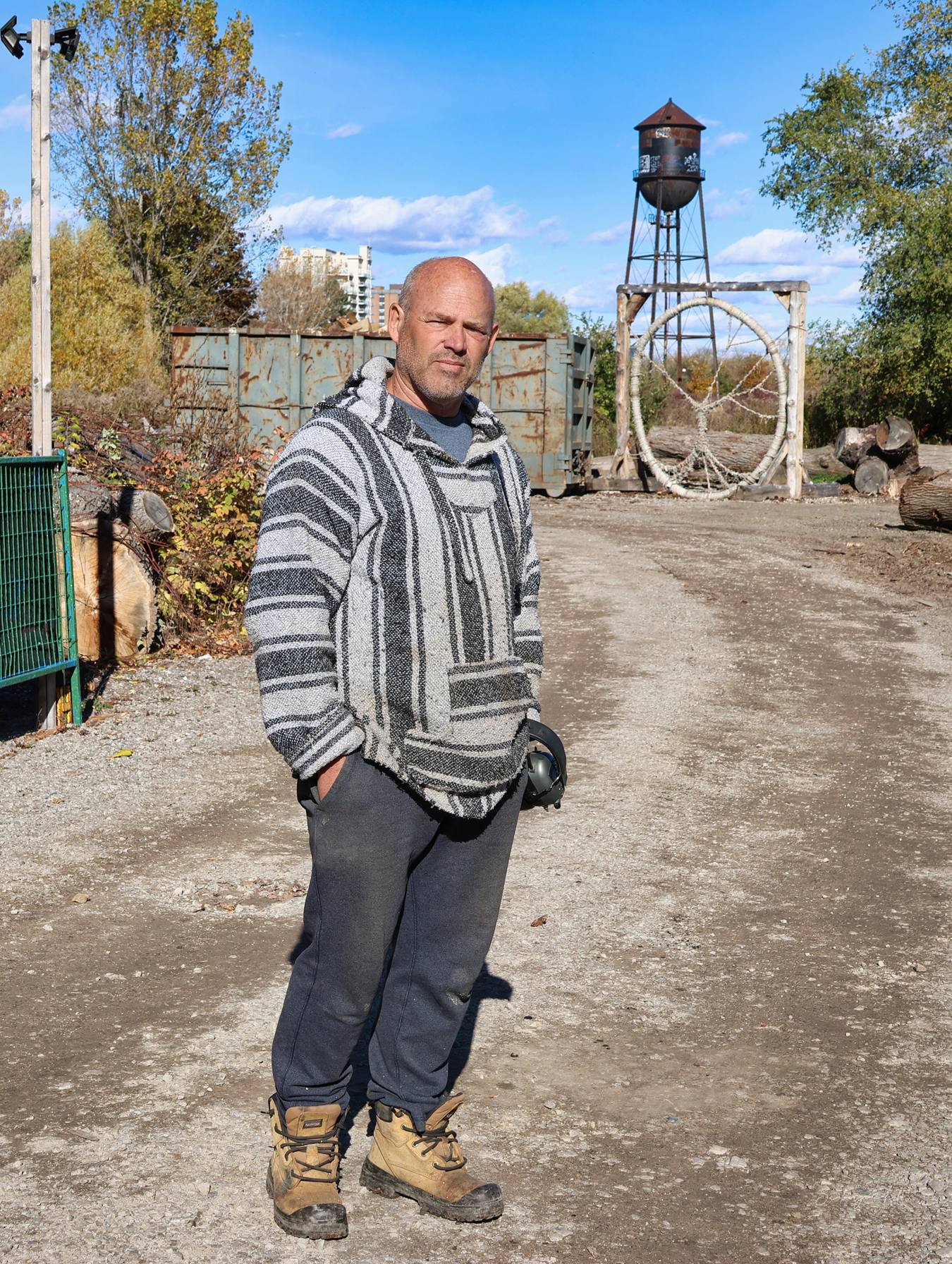
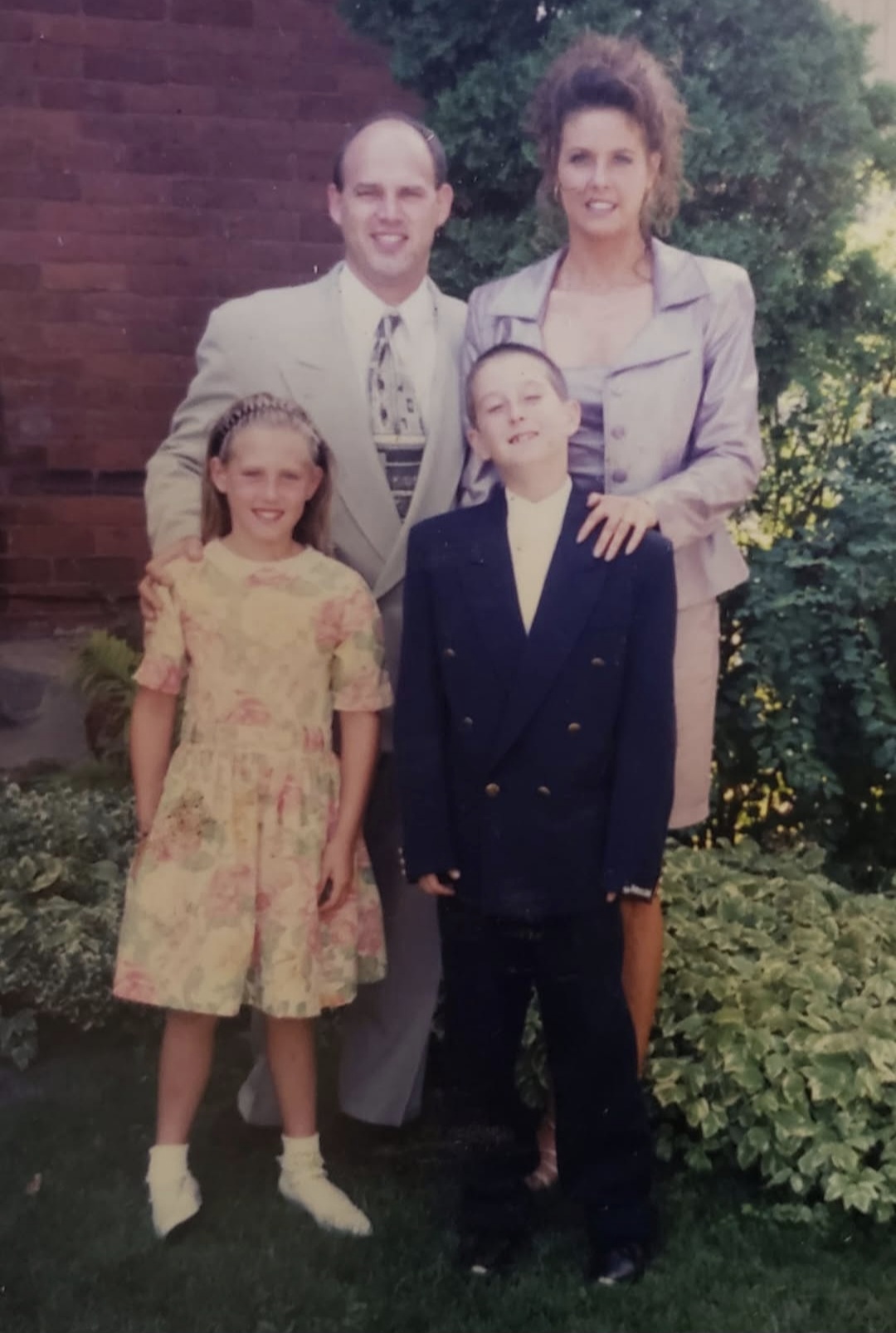
Sidney’s father was part French and part Mohawk.
“We were very late bloomers to our knowledge,” Sidney says. “My father grew up in a time when it was best to keep that quiet. If you were identified as Indigenous, you didn’t share that information.”
Sidney later learned what happened when people found out.
His father was fired from a position as a national trainer for a grocery company after he was confronted about being Indigenous.
“My dad just said, ‘Yeah,’” Sidney remembers.
The owner of the store refused to stand by it.
“You’re firing him?” the owner said. “I’m going to walk you to the front of my store, and you can leave. I’m hiring him today, on the spot.”
That same owner helped the family find housing. Helped move them. Helped steady their footing.
“This guy did everything to pave the way for my dad,” Sidney says.
But the silence in that family story didn’t start there.

When Sidney’s father was fourteen, his own father abandoned him and his siblings.
Winter. A barn. Their mother had already passed.
“My dad and his five siblings were left in a barn in winter,” Sidney says. “His father said, ‘I’m going into town and I’ll be back.’ He never came back.”
Sidney’s father walked to a church for help, but he understood what staying might mean.
“He was smart enough to know, if I stay here, I’m just going to get put in an orphanage,” Sidney says. “He didn’t want that.”
So he ran.
He went to a bush camp he knew about and asked for work.
“They kind of laughed at him at first,” Sidney says. “‘You can’t work here. You’re just a kid.’”
He started in the kitchen. He stayed until he was eighteen. Then one day, he was handed a paycheque for the years he had worked and told to go make a life for himself.
The bush camp became a kind of accidental school.
“The owner didn’t want no dummies around,” Sidney says. “He went around and said, ‘What are you good at teaching?’ And all these guys became my dad’s teachers.”
Later, Sidney’s father applied to college without formal education. He aced the entry exam.
“They accused him,” Sidney says. “They said, ‘There’s no way you can do this well.’ So they gave him another exam with people watching. He aced that one too.”
Not every part of the family story is easy to hold.
Sidney speaks plainly about what happened to some of his father’s sisters after they were taken into institutions.
“You can think of the worst possible things that could happen to a woman,” he says. “That’s what happened.”
Those are the kinds of stories that don’t turn into polished family lore. They turn into silence.
And even decades later, Sidney still feels how hard it is for his father to speak any of it out loud.
“I think it killed him to tell us,” Sidney says. “Even to this day… he’s eighty-four now… I still think he has it in his head, ‘I wish I never would’ve told them.’”
Sidney didn’t grow up with ceremony or stories placed carefully in his hands. He grew up moving around Ontario because his father’s work required it.
“We were almost like a transient family,” he says.
He was outdoors. In motion. The kid running into the house, grabbing a sandwich, and heading back out again.
“I didn’t have time,” he says, laughing. “I was off to play baseball or soccer or road hockey.”
And yet, looking back, he can see how identity was already moving through him.
“When I was younger… most of my real friends were all Indigenous people,” he says. “And even they’d be like, ‘Are you sure you’re not Indigenous?’”
He remembers wearing moccasins as a teenager. His father watching from the porch.
“My dad would sit there going, ‘It’s hard to believe that’s happening. How can you be something and not know it?’”
When Sidney finally learned the history, he went looking for records and connections.
He met with a researcher. Found names. Found family ties connected to places including Drummond Island.
He also found himself standing inside a larger, ongoing debate about Métis identity in Canada, and who is recognized and how.
Sidney doesn’t speak about it like a talking point. He speaks about it like family.
“My dad brings up a good note,” he says. “He says, the Métis people first came through the East Coast… the last settlement was Red River. So he’s very firm. He says, it started in the East.”
And his father passed something else down just as clearly.
“There’s good and there’s bad in every race,” Sidney says his father told him. “Never look at the skin. How do they treat you? Treat them back the same way.”
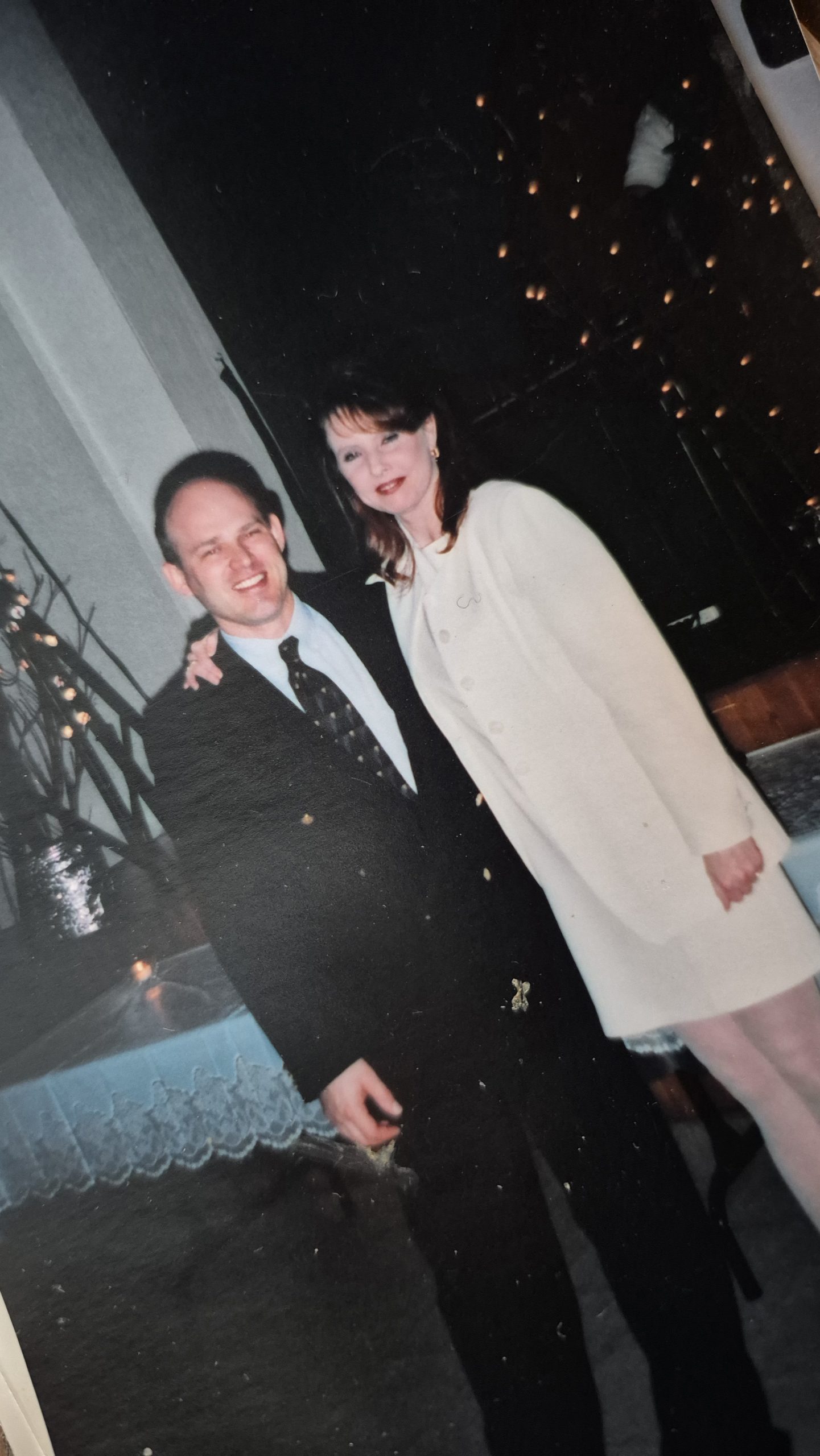
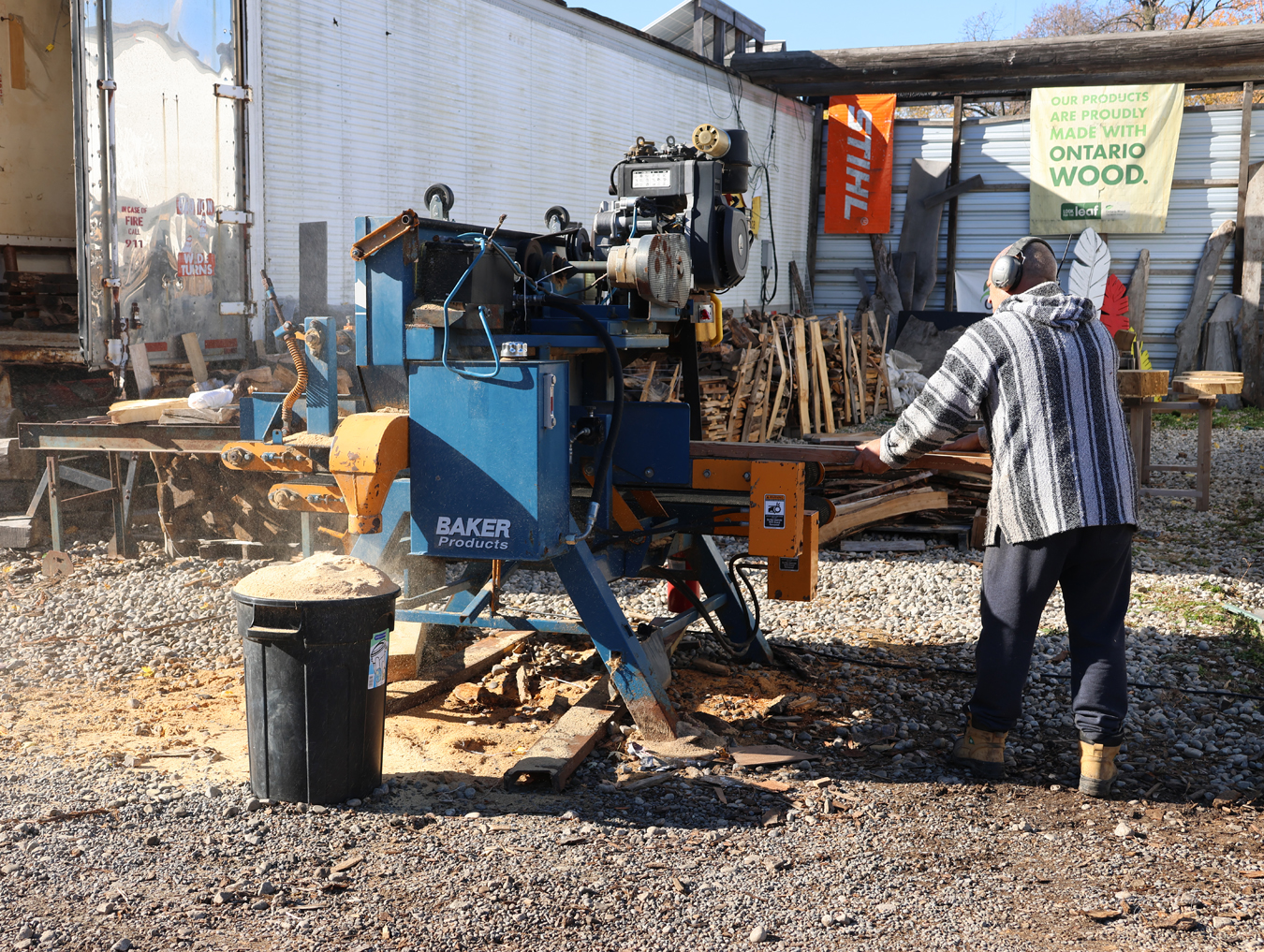
Sidney’s sawmilling life started by accident.
He and his wife, Sheila, were renovating a small home for their growing family. A friend offered them an old barn. They decided to rebuild their house using that wood.
The problem was, nobody wanted to mill the beams.
“They had nails and stuff in them,” Sidney says. “Everyone said, ‘No, I’m not touching that.’”
So Sheila said what Sheila often says.
“Well, maybe we should buy our own portable sawmill.”
Sidney still tells that story like it makes him smile.
They looked at sawmills. He tried to save money on the purchase. Sheila shut it down.
“She’s like, ‘No. We’re not doing that. We’re getting the better motor because it’ll last longer.’”
He cut the beams. Then contractors started calling. A couple of logs. A few more. Then work across Ontario.
“It always started with ‘just a couple,’” he says. “Then it evolved.”
He travelled so much with the mill that strangers began recognizing him.
“One time I pulled into a restaurant and someone said, ‘Are you Sawmill Sid?’” he says. “I’m like, how would you know that?”
What matters most to him now is how the wood arrives.
“I’m only going to sawmill logs in an environmental way,” he says. “Storm or disease. I want it verified that’s how they came down.”
He doesn’t want to be known for cutting down healthy trees because they sell.
“That’s not what I want to be known for,” he says.
It means less control. Less access to prized species.
But his customers learn the rhythm of it. They wait.
“They’d say, ‘When it comes in, you call me,’” Sidney says. “And when it comes in, they’re like, ‘Yep. I’ve been waiting a long time, but yes, I want it.’”
Sidney has always been artistic.
Drawing as a child.
A teacher once told his parents he would pay for him to go to art school.
Chainsaw carving came later.
Not as a novelty. Not as a production.
“Animals are boring,” he says, smiling. “People always ask for a bear. Nope.”
He doesn’t repeat work.
“I’ll never ever do two of the same thing,” he says. “I’ve done that. I’m moving on.”
Then there was the tree.
A twisted lakeside tree in Port Credit, shaped over years by wind off the water. Sidney had walked past it with Sheila more than once.
“She kept saying, ‘You should carve that tree,’” he says. “I’m like, I don’t have time.”
She said it again. And again.
Then, two years later, he got the call.
A major supporter of the arts in Port Credit asked him to come look at that very tree.
Sidney went the way he always goes.
“I walked down to the water first,” he says. “I always got my strength around the water.”
Standing in front of the tree, he saw it.
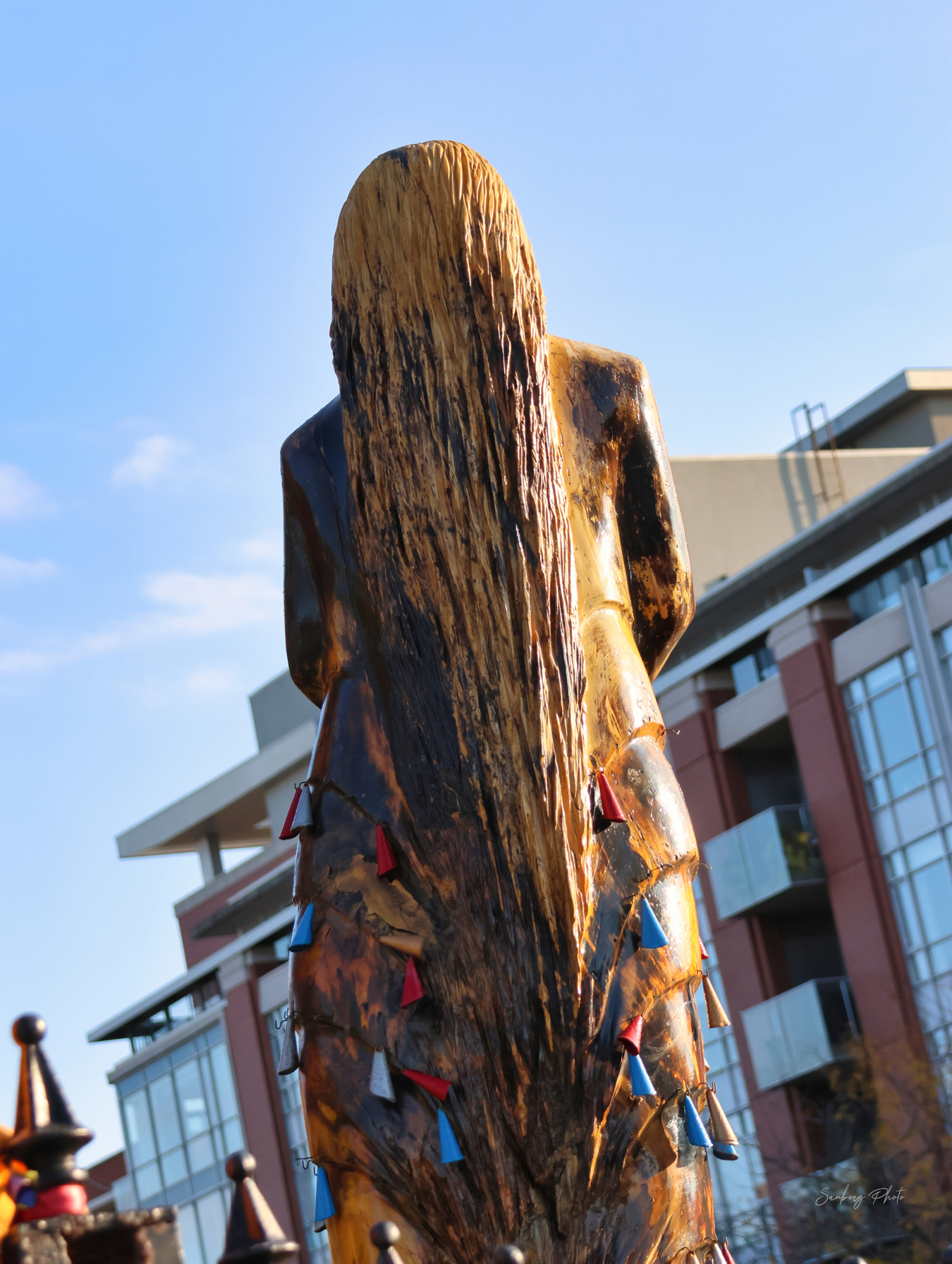
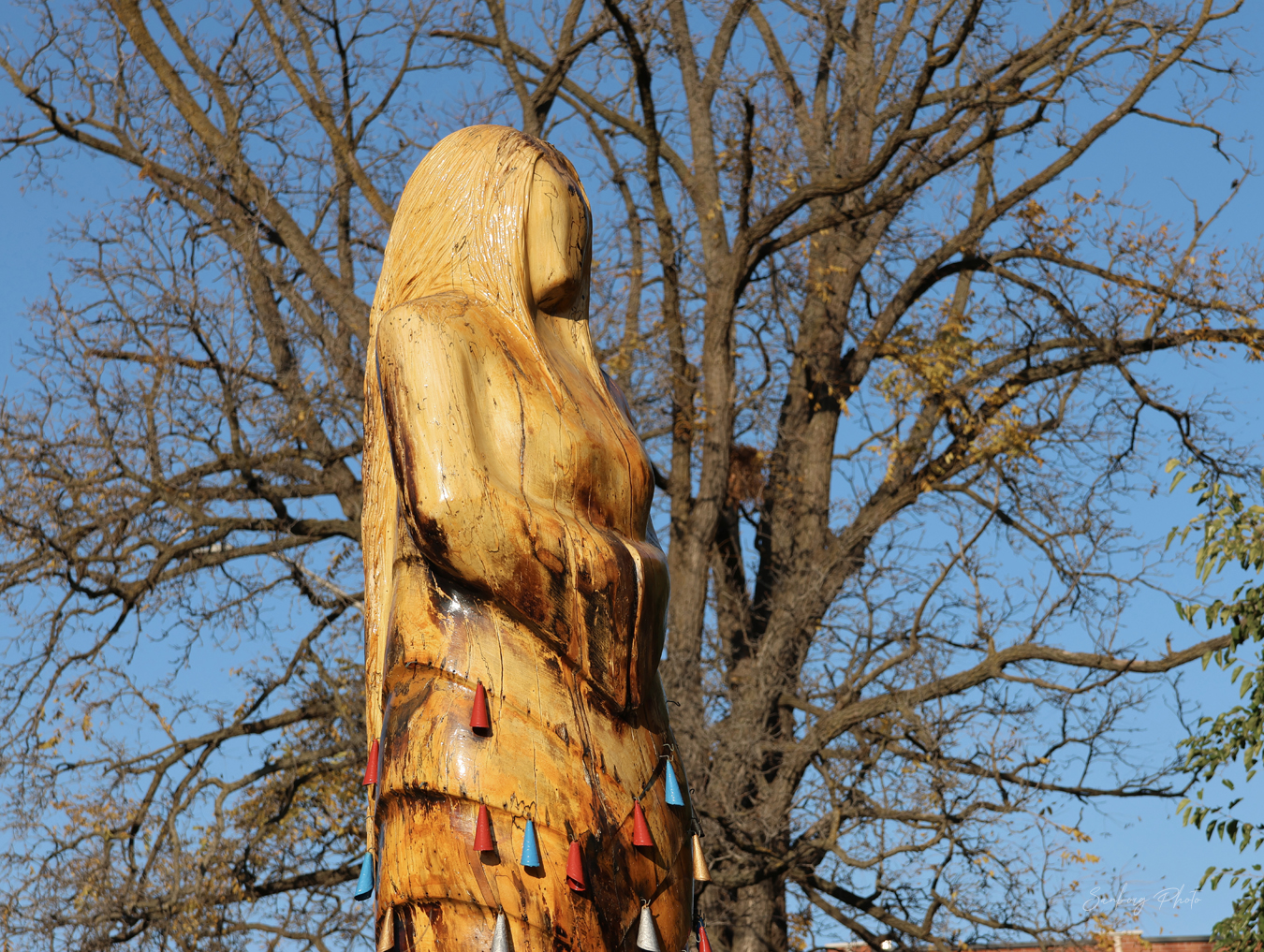
“She wants to dance,” he says. “At that point in time, I knew that tree was going to be a jingle dancer.”
He worked with help. He worked toward National Indigenous Peoples Day. But he also says this plainly: the medium decides.
“She came out to about sixty per cent of what I had on paper,” Sidney says. “Anybody who does on-the-spot carving knows the medium will tell you how it’s going to go.”
He talks about that as fact.
“The spirit within the tree… she guided us.”
On one of the last days, a woman stopped to watch. Later, Sidney learned she was a school survivor.
“She said, ‘This speaks to me in so many ways,’” he remembers. “‘This is going to be a pinnacle piece for the whole community.’”
Years later, people still write to him. Thanking him.
Sidney’s work is not only about wood. It’s also about how you hold people.
Sheila is part of that story, even if she doesn’t want to be seen.
“She is not a public person,” Sidney says. “Half an hour in, she’s ready to go.”
But behind the scenes, she notices everything.
“If I could have done better that day, she’ll let me know,” he says. “And it’s always good to apologize and move forward.”
That same ethic shows up in how they treat staff.
“Someone’s working for you,” Sidney says. “Promote them. Promote them out.”
He tells the story of Joshua, a young man from Nigeria who worked at the sawmill while trying to finish a nursing program.
Sidney asked him early on what he wanted his life to be.
“What do you want to do ten years from now?”
Joshua was studying. Exhausted. And then Sidney learned why.
“When he was leaving the sawmill, he was going back to a shelter,” Sidney says. “Some nights there wasn’t any room. So he was living on the street.”
They helped him find housing. Supported him through school. And when he graduated, Sidney wouldn’t let him stay stuck.
“Joshua, your last days are coming up here,” he told him. “You’re going to go become a nurse full time.”
When Joshua couldn’t find work, Sidney made calls. Within days, interviews were lined up.
Joshua still comes back sometimes.
“He said, ‘You’re a father figure to me,’” Sidney says.
He stops there.
Sidney came to Mississauga through work, but he stayed because of place.
His relationship is strongest in Port Credit and Lakeview.
“It has not lost its small-town appeal,” he says. “The people… I may not find the same pleasantries elsewhere.”
His relationship with the Mississaugas of the Credit First Nation grew through time, work, and trust, especially after the jingle dancer carving.
“That’s where that relationship built,” he says. “And it’s been a really good relationship.”
He speaks carefully about belonging.
“These lands belong to the Haudenosaunee and the Mississaugas of the Credit,” he says. “Anyone else… is a visitor.”
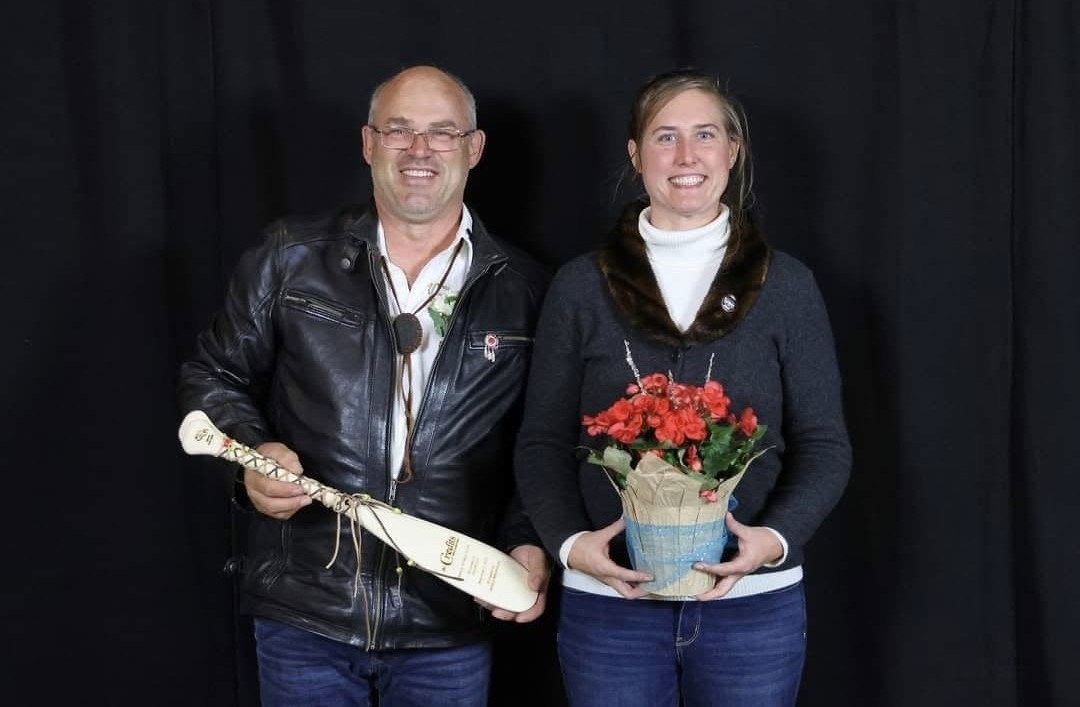
That same respect shows up in the paddle he now carves again and again, one of the only forms he will repeat.
“The paddle has meaning,” he says. “A canoe doesn’t mean anything until someone is sitting in it. A paddle doesn’t mean anything until it touches the water.”
The Credit River, to him, is movement. History.
“It was the first highway,” he says.
The wood is local. That matters.
“The wood itself has a historical presence within the region,” he says.
Sidney doesn’t talk about legacy. He talks about responsibility.
About paying attention. About not taking what isn’t yours.
About listening — first.